Comments Off

Monthly Sector Report – Gold Miners 2013

April 2013 saw one of the worst price capitulations on gold futures including its biggest single-day plunge in 30 years. On April 15, gold fell by more than 9% to $1,361/ounce, its most spectacular drop since 1983. In two days, the metal had lost a total of 13% and dropped to its lowest level in more than two years.

In fact, gold was not the only price anomaly in April – Silver was also beaten down in the same period and dropped below $26 for the first time since November 2012. It was the worst 2-day price drop on Silver since September 2011.  In that same week, Natural Gas broke above $4 for the first time since September 2011.

These wild swings are because of the flight of money in and out of safety and quality due to inflationary pressures. Investors now are unsure about risk and even more unsure about safety in commodities as prices have been deemed to be inflated. Some have even called the drop in gold, silver and oil Demand Destruction.

This report looks at the possibility of profiting from this in any direction by checking out the companies that mine gold. It will be based on the recent earnings and outlook as well as the strength (or weakness) in their fundamentals to support their outlooks.

With earnings season winding down in a couple of weeks and most of the companies having already reported their numbers, this will be an opportune time to take some speculative trades and ride on the secondary moves of some of these companies.

Click here to get the full report.

Subscribed Members can download their copy here.

Share
Comments Off

April 2013 Review, May Preview

GOODBYE KEPPEL TOWERS!

After six and a half years at Keppel Towers, The Pattern Trader Tutorial (WAT) is leaving this old “home” and headed for new premises. We leave behind many experiences and take with us only the memories of this place that has been home to AKLTG for almost ten years.

In December 2006, The Pattern Trader Tutorial ran at AKLTG at Keppel Towers for the first time as WAITS. In January 2007, it became known as the Wealth Academy Trader (WAT). The first two batches of the tutorial was run in the storeroom of the main training center and it was there that I met two of the most precious friends that I still hold dear till today, Alicia and Henry.

And they became part of the very first team of coaches and helpers including Lawrence and Melvyn (who runs all my websites today).

I had my very first best-seller published and launched there.

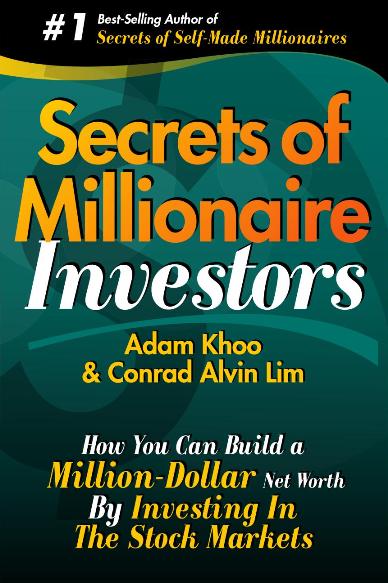
The Secret of Millionaire Investors was released in May 2007 and it shot up to #1 by June that year and stayed there for 13 weeks.

I even had my first magazine interview here with an appropriate picture to boot …

Adam and I ran our 5th batch of WA in Keppel Towers for the first time in July 2007 (previous batches were run at Expo).

By August 2012, after more than 50 batches of WA with more than 5,000 graduates, I taught my last batch of Investors (pic below).

Needless to say, the many many Coaches and I have a lot of memories of the place …

Of the many Gatherings and Tutorials that WAT hosted at Keppel Towers, past Graduates will remember historical moments that we witnessed “live” such as;

We also traded through the second worst Bear Market in stock market history in 2008, we saw the demise of two of the oldest institutions in the world in Lehman Brothers and Bear Stearns, we witnessed the collapse of the European economy, survived the destruction of MF Global, saw Obama take office twice, lived through the deaths of Osama, Saddam and Gaddafi, watch in horror in 2011 as Japan suffered the double jeopardy of a 9.03 magnitude earthquake (the fifth most powerful on record since 1900) that was followed by Tsunami that took 15,883 lives, … the list goes on and on …

We also cherish the moments we shared with friends from the other side of the planet such as David Caploe (below, left), Ron Ianieri (below, center), Richard Martin, John Person, the late David Elliot and local friends like G.M Teoh (below, right) and Michael Wu.

And to the many staff members who came and went through the years including Wandy, Pearlyn and Daniel (below, left – left to right) and Angela and Terence (below, right – left and right) …

… and many others including Aaron (who married Pearlyn), Annie (below, left – who is engaged to Yi Chuan, one of my coaches), Kristie (below - 2nd from left, who will be marrying Daniel), Shi Jun ((below, right) Ser Yew, Shermin and Shidiq who are still with us today.

I still can’t get over the fact that Pearlyn and Angie are mothers today! Happy Mother’s Day to both of you!!

April 2013 saw the last two batches of WAT completed at Keppel Towers with the graduations of batches 64 and 65. Between those graduations was WATMY22 in K.L.

WAT64 – Tuesday 09 April, 2013

WATMY22 – 12 to 15 April, 2013 (K.L.)

WAT65 – Friday 19 April, 2013

And having closed out the very last session at AKLTG in Keppel Towers on Tuesday 23 April, 2013, we, the Trainers and Coaches and Friends of WAT took a commemorative shot before bidding adieu to our old home.

Now we move on and leave the memories behind.

Goodbye, TR5 … it has been a blast and it was great while it lasted!

Now bring on the NEW PLACE!! We’re moving here …

See you all at the new facilities which promises to be better, cooler and state-of-the-art!!

MARKET MATTERS

Like last year, April this year was a similar rock-and-roll story that broke the once reliable statistic that April is the most bullish month of the year. What a wild ride it was. And none more so than in the commodity space.

April 2013 saw one of the worst price capitulations on gold futures including its biggest single-day plunge in 30 years. On April 15, gold fell by more than 9% to $1,361/ounce, its most spectacular drop since 1983. In two days, the metal had lost a total of 13% and dropped to its lowest level in more than two years.

Silver was also beaten down in the same period and dropped below $26 for the first time since November 2012. It was the worst 2-day price drop on Silver since September 2011.  In that same week in contrarian fashion, Natural Gas  broke above $4 for the first time since September 2011.

DOW closed out April with a gain for its fifth consecutive month. S&P500 broke a new historical high while NASDAQ make a new multi-year high on the last day of the month. But what a month it was …

For almost the whole month, Defensive sectors such as Staples, Utilities, Healthcare and telcos dominated the leader-board with only a handful of session led by a mixed bag of Financials and Tech.

Bond yields fell to their lowest levels of the year while the VIX is flat-lining along 13.50, looking like its ready to launch upward from that support level. Earnings haven’t been all that impressive with some big names selling down such as MMM, AMZN, GE, IBM and CAT, to name a few. Revenues have been largely disappointing with more than half the S&P companies (that have already reported) missing expectations.

Although this year’s market performance in April was better than last year’s, the economic circumstances are not. With growth contracting everywhere in the world, the U.S. managed to pull out a surprising and blatantly manipulated number to avoid another contraction.

This was the second worst April volumes in more than two decades – last year was the worst – and considering the worsening economic front YonY, why should we be higher on volumes than last year which was not as bad?

Here’s one last take-away for all you Wave practitioners …

That’s right. You’re looking at the end of three Wave 5s. Enough said.

MAY PREVIEW

May 2013 has 22 trading sessions and one public holiday. May is infamous for having the year’s most fearsome correct. Some Mays in years past (also in 2012) are known to have wiped out the whole year’s gain in a single month. May starts well but almost immediately goes into one of the most bearish weeks on the trading calendar.

May Trivia

Commodities

SUMMARY

Now for the month of May, famous for selling off. Traders will remember how May wiped out four months of gains last year even after the “experts” claimed that the Sell-In-May prophecy wouldn’t work in an election year. This year, those “experts” are keeping strangely quiet about making such claims again.

I suspect we’re in for another sell-off and May will keep its proud tradition which seldom fails to deliver. The last time it didn’t deliver was 2007 … and look what happened the following year. I don’t think we’re going fall off a cliff next year therefore we should sell-off this May – it will only be healthy if we did.

To all the Mothers reading this, I wanna wish you all Happy Mother’s Day in advance and praise all of you for doing a great job!

Cheers!

Share
Comments Off

The Great Deformation: The Corruption of Capitalism in America – Chapter 18

The Great Deformation:
The Corruption of Capitalism in America
by David Stockman

Excerpts from: CHAPTER 18

THE GREAT DEFORMATION OF CAPITAL MARKETS
How Wall Street Got Huge

The collapse of three separate $5 trillion financial bubbles in less than a decade attested to the deeply impaired condition of the nation’s capital markets. Yet the spectacular round-trips of the S&P 500 and Case-Shiller housing price index were not the only progeny of the Fed’s bubble finance. There was actually an even greater deformation lurking beneath these wild rides; namely, the aberrant journey of the giant government bond market which forms the foundation of Wall Street and drives the financial rhythms by which it operates.

During the 1970s the financial system, in the aftermath of Camp David, endured the near-destruction of the government bond market. But then for the following thirty years it was favored with continuously rising bond prices constituting not only the greatest uninterrupted market rally in financial history, but also the greatest deformation.

It instilled in Wall Street the utterly false lesson that fortunes can be made in the carry trade, an illusion that is possible only when the Treasury bond price keeps rising, rising, and rising. Yet under a régime of sound money it is not possible for public debt to appreciate for long stretches of time, and most certainly not for thirty years.

THE GLORIOUS REIGN OF THE BRITISH CONSOL: GOVERNMENT BONDS IN THE ERA OF SOUND MONEY

This truth is illustrated by the glorious reign of the 3 percent British consol, a perpetual bond of the British government. First issued in 1757, it remained in circulation until 1888. Other than temporary wartime fluctuations, the price of the 3 percent consol did not change for 131 years. Accordingly, no punter got rich riding the consol on leverage, yet no saver lost his shirt by owning it for its yield. The consol was a sound public bond denominated and payable in sound money.

After August 1971, by contrast, the US Treasury bond became the “anticonsol”; that is, the poker chip of speculators, not the solid redoubt of savers. The thing to do was to short it during the 1970s when the Great Inflation crushed its value; own it during the 1980s and 1990s when disinflation lifted its price; and rent it after December 2000 when well-telegraphed bond-buying campaigns by the central bank made holding the bond a front runner’s dream.

The crucial difference between the stable era of the consol and the volatile era of the anti-consol, of course, is the monetary standard. The gold content of the pound sterling did not change for 131 years; in fact, not for 212 years. By contrast, for the last forty years the dollar has had no content at all, aside from the whim of the FOMC. Needless to say, what is implicated here is far more than “fun facts” about the classical gold standard.

The era of the anti-consol demonstrates that capital markets eventually lose their capacity to honestly price securities under a régime of unsound money; they end up dancing to the tune of the central bank; that is, pricing the trading value of financial assets based on expected central bank interventions, not the intrinsic value of their cash flows, rights, and risks.

This profound deformation of capital markets during the last forty years shaped the evolution of present-day Wall Street. These financial institutions had a near-death experience during the Great Inflation, when the value of stock and bond inventories was pummeled and activity rates in brokerage, underwriting, and mergers and acquisitions (M&A) advisory withered. But Wall Street was born again when Paul Volcker broke the back of wage and commodity inflation, thereby triggering the thirty-year ascent of the Treasury bond.

During this long upward march, Wall Street progressively learned that the Fed was operating much more than a disinflation cycle that would run its course. Instead, it had set in motion an asset inflation scheme that it would nurture and backstop at all hazards. The thing to do, therefore, was to accumulate financial assets, fund them with short-term debt, and harvest the positive spread.

More or less continuously over thirty years, bond prices rose and the cost of carry in the wholesale money markets fell. At length, this fundamental yield curve arbitrage, along with a plethora of variations on that trade, generated stupendous profits.

Some profits filtered down to the bottom line of Wall Street profit and loss statements (P&Ls), but much of the windfall was corseted in the salary and bonus accounts of the major Wall Street houses. In either case, the signal was unmistakable: the Fed’s deformation of the financial markets was turning Wall Street balance sheets into money machines: the bigger the balance sheet, the better the money.

WHEN WALL STREET TRADING DESKS AWOKE IN SPECULATORS’ HEAVEN

The crucial first step in fostering the carry trade bonanza was bringing money market interest rates down to ground level after they had erupted into double digits during the Great Inflation. At the peak of the Volcker monetary crunch in mid-1981, open market commercial paper rates reached 16 percent before receding to a 6-8 percent range during the following decade and a half. In this period the Fed steadily reduced the trend levels of short-term rates, but usually with a decent regard for the state of the business cycle and the rate of progress on disinflation.

An inflection point was reached at the time of the dot-com bust, however, and this cautionary approach was abruptly jettisoned. Indeed, soon after the Fed commenced its manic interest rate-cutting campaign in December 2000, Wall Street trading desks thought they had died and gone to speculator’s heaven.

The interest rate on AA-rated financial commercial paper, the benchmark for Wall Street wholesale funding, then stood at 6.5 percent. By the end of the following year, unsecured financial paper rates had dropped to 4 percent and then to 2 percent by the end of 2002 and eventually to 1 percent by the spring of 2003. Moreover, repo financing, which was secured by collateral, dropped even more sharply.

In the face of an 85 percent plunge in Wall Street’s cost of production – that is, the cost of funding its assets – there was hardly an asset class imaginable that did not generate gushers of positive cash flow. When financed with this 1 percent wholesale money, the much bigger yields of Treasuries, corporates, GSEs, real estate loans, junk bonds, and junk mortgages all produced fat profit spreads. Indeed, given standard leverage in excess of 90 percent on most of these asset classes, the huge “spread” gifted to Wall Street by the Fed was equivalent to handing dealers their very own printing press.

HOW FIVE WALL STREET “INVESTMENT BANKS” GREW 200X

It thus happened that the Keynesian prosperity managers at the Fed took aim at levitating the GDP, but instead unleashed the assembled genius of Wall Street in hot pursuit of balance sheet growth at all hazards. The most spectacular case was the five so-called investment banking houses – Goldman, Morgan Stanley, Merrill Lynch, Lehman, and Bear Stearns. On the eve of the 2008 crisis, these five Wall Street houses had combined balance sheet footings of $5 trillion, meaning that their girth exceeded the GDP of Japan at the time.

As recently as 1998, however, the combined balance sheet of these firms or their predecessors was only $1 trillion. And back in 1980, before these “investment banking” houses were reborn as hedge funds, their footings had totaled only a few ten billions. The five behemoths thus started their thirty-year ride on the rising bond market when they were less than 1 percent of the size where they ended.

As previously indicated, there was a good reason for this historic modesty. The old-time Wall Street businesses of securities underwriting, merger advisory, and stock brokerage didn’t require much capital; they made money providing value-added financial services, not by scalping the yield curve and trading swaps.

Furthermore, the devastation of financial markets by the Great Inflation so sharply diminished demand for investment banking services that Wall Street had been virtually drawn and quartered. Two-thirds of all firms doing business in August 1971 had been carried off the field or merged by the time Chairman Volcker had finished his bleeding cure. So, when the market hit its July 1982 bottom, Wall Street didn’t have much of a balance sheet or much of a business.

What remained was born again during the next thirty years, but in an entirely new financial body. Salomon Brothers was the prototype, and by 1985 it was the undisputed king of Wall Street, enjoying a prosperity not seen among financial houses since 1929. Perhaps that’s why there was a berth for me when I arrived there in early 1986, a fugitive from the government budget business and clueless about corporate balance sheets.

I soon learned while hanging around the partners’ dining room, however, that a singular fact explained what the born-again Wall Street firms were really all about; namely, on days that interest rates went down (and bond prices therefore rose), Salomon’s P&L was in the black. Conversely, when bond prices fell, its P&L was in the red. It rarely happened otherwise.

The moguls behind the screen, of course, could not acknowledge that the way to make big money was to stand around catching falling interest rates in a Wall Street rain barrel. So Salomon’s unrivaled profitability was attributed to wizardry, specifically to the mathematical trading alchemy of John Meriwether and his team of quants who themselves would one day be reborn as Long-Term Capital Management.

It was true that Meriwether had discovered that tiny pricing discrepancies in the government bond market could be profitably arbitraged by means of computerized trading technology. But in building up a huge proprietary trading book, at least by the standards of the day, he had also discovered an even more important truth; namely, that being “leveraged and long” was even better. In fact, it was almost guaranteed to yield a perennial winning hand. In a fixed-income world rebounding from double-digit inflation, bond prices were almost always going up.

The roots of that aberration, however, went way back to the generation of bond investors who had been destroyed in the monetary hell of double-digit bond yields during the 1970s. The Great Inflation scourge was not quite the wheelbarrow inflation of Weimar Germany, but it still left investors deeply traumatized.

So, when they finally stopped dumping their bonds and cursing the very idea of fixed-coupon debt in the early 1980s, they had actually overdone it. At its 15 percent peak in July 1981, the long-term Treasury bond yield reflected not merely compensation for CPI inflation, which had averaged about 9 percent during the prior four years, but also a deep distrust of the reckless post-Camp David monetary policies which had brought so much carnage to the fixed-income markets.

In short, there was a fiat money penalty in the government bond rate which would take three decades to dissolve. Yet dissolve it did – slowly, steadily, ineluctably. Except for brief cyclic gyrations, the ten-year Treasury yield never strayed from its long march downhill, breaking back under the double-digit line in 1985, tracking into the 6-7 percent range during the mid-1990s, crossing through 5 percent by the turn of the century, and eventually finding a bottom at 1.5 percent thirty-one years later.

This meant that had a modestly leveraged Rip Van Winkle put on the long-bond trade in 1982, he could have quadrupled his money while sleeping peacefully for three decades, and made many times more than that with the heavy leverage employed by the big trading houses. At the end of the day, there is no secular trend in modern financial history that is even remotely comparable in protean power and transcendent significance.

Surfing the long descent of the bond yield became the pathway to money making in the born-again Wall Street. In due course, traders learned that the odds were strikingly large that bond prices would be higher (reflecting the falling yield) month after month. This also meant that the risk of owning the bond on high leverage was small, and that the amplification of returns on the reduced amount of capital deployed in a leveraged trade was huge.

After the Fed settled into the Greenspan Put and Bernanke’s Great Moderation, traders were not only confirmed in their directional bet, but now they had an official safety net, too. Owing to the central bank’s incrementalism with respect to changes in its pegged federal funds rate and its continuous emission of smoke signals and verbal cues about future policy, traders who stayed even partially sober during market hours had no reason to fear owning the Treasury bond on 95 percent short-term borrowings.

If their cost of carry was going to rise, they would get plenty of warning from the Fed. Meanwhile, harvesting the spread on larger and larger positions that required only tiny amounts of permanent capital, they proved that money could be legally coined, even outside of the US mints.

INSIDE THE BOND ARB AT SALOMON BROTHERS

It wasn’t so automatic in the initial years, however. In the summer of 1987 Salomon began to wobble badly, so John Gutfreund, the firm’s legendary CEO, appointed a high-level task force to come up with a plan to fix the firm’s faltering profit machine.

Part of the problem was the usual Wall Street warfare between investment bankers and traders. Qualified as neither, I was apparently added to the task force in order to occupy the fire field between the warring factions. There were three memorable facets to the circumstances at hand.

First, the ten-year Treasury bond had reached a low of 7 percent in early 1987 and then had been steadily backing up for most of the year; it eventually flared up to 9.5 percent during the initial Greenspan tightening scare of late August and September 1987. So, if you were standing around with a financial rain barrel trying to catch falling interest rates, it wasn’t working out at the moment: the market value of the long bond suffered an abrupt 30 percent loss in nine months.

Secondly, duly noting that Salomon’s giant government and municipal bond trading operation had incurred deep losses during the recent several quarters, the investment bankers on the task force pronounced it a “bad business.” Their “restructuring” plan therefore proposed to get out of “flow” trading for customer accounts and refocus the firm’s giant bond operation on the immensely profitable “prop” trading business run by Meriwether.

But even though his proprietary trading unit had its own P&L, staff, computers, and fame, John Meriwether wanted nothing to do with dumping the government bond operation. How would his traders get “market intelligence” about client portfolios?

Thereupon, the Salomon investment bankers were made to understand that “flow” trading – that is, front-running clients – was essential to the firm’s “prop” trading riches, and so the government bond operation lived for another day. Likewise, after Greenspan flinched on Black Monday, bond yields resumed their fall and Salomon’s P&L began to rebound smartly. Soon the task force was disbanded, nothing at the firm was “restructured,” and the thirty-year run of bond price appreciation resumed its course.

Thereafter, Salomon Brothers grew fulsomely in the “leveraged and long” modality of born-again Wall Street, and was eventually swallowed up by Sandy Weil’s serial acquisition machine. The highly leveraged trading model Salomon had pioneered in the 1980s thus metastasized in the underbelly of Travelers Smith Barney at first, and then ultimately in the behemoth known as “Citi.”

Given an ever more reliable and compliant central bank policy, the route to elephantine profits at the Citigroup trading colossus was pretty much a no-brainer. The formula was to accumulate financial assets aggressively, fund them largely in the low-cost commercial paper and repo markets, and then book the profit spread in a manner that proclaimed the streets of Golconda were once again paved with gold. Moreover, after enough profit had been booked to satisfy a 20 percent return on equity objective, the vast remainder of trading gains flowed into bonuses and employee profit sharing.

As the years and mergers rolled on, the true financial dimensions of this corpulent son of Salomon faded into the fog of Citigroup’s undecipherable financial reporting. But success invariably has its imitators on Wall Street and before the 1990s ended, the five former investment banks had all been reborn, reshaped, and remodeled on the Salomon template.

HEDGE FUNDS IN INVESTMENT BANKER DRAG

The $1 trillion, or thirty-five-fold, growth in combined balance sheet footings of the five investment banking houses between 1980 and 2000 had nothing whatsoever to do with “investment banking” or regulated securities “underwriting.” M&A bankers and corporate advisory services still didn’t need a dime of capital.

They got paid on account of the “regulatory brand equity” of the major houses; that is, the safe harbor value at the SEC and plaintiff’s bar that Morgan Stanley’s blessing, for example, conferred on the typical economically dubious M&A deals undertaken by CEOs and their boards. Likewise, standard equity and bond underwritings were essentially a “best efforts” placement of securities in the public market by dealer cartels.

They almost never underpriced these distributions, meaning that the risk of loss was small. Their investment banking departments thus were operated on a “capital lite” basis. The huge underwriting spreads, as high as 7 percent on equity deals, reflected returns to regulatory brand equity, not capital risk-taking.

By contrast, what had grown by leaps and bounds were the sales and trading operations of the five “investment banking” houses and especially the units they were pleased to label as their “prime broker” divisions. Obviously, these units were not anything like what the name implied; they did not resemble in the slightest an institutional market version of Merrill Lynch’s doctors’ and dentists’ stock brokerage. The latter, at least in theory, were in the customer service business.

The truth was that the five broker-dealers had become hedge funds. While they still dressed up like investment banks, their old white-shoe businesses had actually become a sideline. Instead, they were now deep into the balance sheet businesses, positioning large-scale inventories of securities for active counterparty trading against their external hedge fund “customers.”

Likewise, the “underwriting” that was really of interest to them, outside of the SEC-chaperoned IPO bubble, was OTC underwriting. That, too, was a form of trading which involved slicing and dicing existing securities so that the pieces and parts could be swapped into custom-tailored (bespoke) trades.

This financial alchemy took place through a private-dealer venue where whole loans, securitized loan pools, and derivatives of these pools could be traded on a bilateral basis outside of the regulated exchanges. In most instances, the “hedges” they sold on an underlying security or index basket were not against positions actually owned by their so-called customer. In fact, both parties to these trades were usually just gambling during working hours.

All of these new-style trading and OTC product activities were balance sheet intensive. This breakneck growth, therefore, should have encountered a formidable barrier on the free market; namely, the requirement for large dollops of equity and other risk capital to fund these mushrooming (and risky) balance sheets.

In point of fact, however, the five born-again investment houses didn’t have much equity capital. Even by 1998, they had posted a combined net worth of only $40 billion, meaning they were levered 28 to 1. There is not a chance that the free market would have tolerated such radical leverage ratios; that is, absent the assurance that the central bank stood behind the distended balance sheets of these firms no one would have done business with them.

Indeed, that assurance was the very essence of the Fed’s reprehensible bailout of Long-Term Capital Management in September 1998. By then the Wall Street house of cards was plainly evident. Notwithstanding all of the post-crisis finger-wagging by the financial establishment against LTCM’s “massively leveraged” trading book, the true facts were damning: LTCM had obtained these massive borrowings from its “prime brokers” whose “investment bank” parent firms were nearly as levered as their now infamous hedge-fund customer.

Contrary to the cover story, therefore, LTCM was not some kind of rogue outlier; it was actually one of “da boyz.” John Meriwether, the firm’s chief, was not doing anything under his own shingle in Greenwich that he had not done at Salomon, and that had not been copied, replicated, and enhanced by the rest of Wall Street.

What the Fed’s LTCM bailout really did was give a green light to the approximate 30 to 1 leverage ratio that already existed all around Wall Street. Indeed, in its misguided belief that the bloated stock averages of September 1998 were the linchpin to national prosperity, the Fed had authorized a cartel of dangerously leveraged gamblers – the rest of Wall Street – to bail out one of their own.

WHEN FIFTEEN GAMBLERS GOT 30X LEVERAGE BLESSED AT THE NEW YORK FED

At the end of the day, the Fed’s craven sponsorship of the LTCM bailout might have been even more lethal than the panic rate cuts of 2001. The former action, in fact, amounted to a vastly upgraded Greenspan Put. As such, it surely paved the way for the final, massive growth of Wall Street balance sheets during the next decade.

As it happened, the head gambler for each of the fifteen major Wall Street banking houses had attended the crucial LTCM bailout meeting convened at the headquarters of the New York Fed. There they had duly noted the fearful perspiration and wobbly knees of officialdom and had concluded, accurately, that the Fed would prop up the casino at all hazards.

After that learning experience, it is not surprising that the five “investment banks” put their balance sheets on financial steroids. In fact, their footings quadrupled between the LTCM warning shot and the thundering meltdown of September 2008. The “financial crisis” thus arose from the vast deformations of the financial system to which the Fed’s interest rate repression and “put” pandering had given rise.

Fed apologists have attempted to deflect culpability by means of a false narrative with respect to the increased leverage limit for broker-dealers. But these SEC rule changes occurred much later and were largely meaningless. When they became effective in 2004, it was long after 30 to 1 leverage was deeply implanted on Wall Street. The five investment houses already had dangerously high leverage ratios in place by 1998 at the “holding company” level where it counted. By contrast, the SEC rule changes applied to the infinitely malleable but irrelevant balance sheets of their “regulated” broker-dealer subsidiaries.

These “broker-dealer” subsidiaries, however, were not observable, operational businesses. They were essentially pro forma accounting boxes whose financial statements could be shoe-horned into compliance with virtually any regulatory standard. Consequently, the 2004 increase in the SEC-permitted leverage ratio was mainly an accounting annoyance and was noticed only by green eyeshades at the time.

What happened to the holding company balance sheets of the five investment houses during the nine years after 1998 is the real story. It amounts to a searing indictment of Fed policy. When the mortgage and credit bubble reached its fevered peak in 2007, the five “investment banks” were posting $140 billion of net worth, meaning they had generated about $100 billion of additional equity since the LTCM crisis. This gain was almost entirely from “retained” earnings, much of which later proved to be dubious accounting gains.

During the same nine-year period, their asset footings grew, too, by the astounding sum of $3.4 trillion, or by thirty-four times more. Needless to say, the distended balance sheets of these five former white-shoe advisory and retail brokerage firms, which now stood at $4.5 trillion, were a screaming affront to the free market. In the absence of the Greenspan and Bernanke Puts and the Fed’s fully telegraphed interest rate pegging policy, it is not possible that such colossal accumulations of assets and leverage could have been assembled.

Had capital and money markets been fully at risk, investors would have lowered the boom on the Salomon “leveraged and long” model well before 1998. Consequently, the $4.5 trillion balance sheet of the “investment banking” houses never could have been assembled. No rational investor, if fully at risk, would have been part of a $4.35 trillion debt pool supported by only the $140 billion pittance of common equity being posted by the Wall Street houses.

In truth, the real equity underpinning the swollen balance sheets of the five investment houses was the Greenspan Put. After the LTCM bailout, the financial markets had been monetizing the maestro’s fear of truly free markets all along.

In the meantime, of course, these bloated balance sheets became a virulent breeding ground for endless varieties of toxic mortgage securitizations and gambling hall derivatives. The reason was straightforward: wholesale money markets had become fearless.

Accordingly, almost anything that trading desks could acquire or concoct could be funded. With short-term repo financing available on almost any class of asset – including junk bonds, equities, and illiquid private loans, as well as mortgages and mortgage-backed securities of nearly any quality – there was virtually no limit on either the size or quality of Wall Street balance sheets.

GARBAGE IN THE BELLY OF THE BEAR

The evidence for this lies in autopsy data from Bear Stearns, among others. From 2000 to 2008, Bear’s balance sheet grew from $90 billion to $400 billion. Yet its funding profile shortly before it collapsed bespoke a financial powder keg. Its fiscal 2007 financial statements showed only $12 billion of shareholder equity and just $55 billion of long-term debt.

This meant that the remainder of its $400 billion of liabilities was comprised primarily of “hot money” loans, including $100 billion of short-term repo, $30 billion of unsecured finance paper, and $75 billion of customer payables. What happened when its balance sheet quality was called into question after big unexpected losses in the second half of 2007 was obviously a run on these hot-money funding sources. Accordingly, repo counterparties refused to roll their paper, unsecured borrowing lines were curtailed or cancelled, and customers demanded payment of their outstanding trade balances.

The evidence of the precariousness of Bear Stearns’s balance sheet lies in its having to roll approximately $60 billion of repo each morning; that is, 15 percent of its balance sheet had a one-day shelf life. As the crisis had intensified, the firm’s secured lenders had continuously choked up on the bat, cutting thirty-day repo to fifteen days, and then five days, and finally just one day.

Worse still, about one-third of this massive daily repo roll was based on mortgage-based collateral that Bear Stearns’s accountants had found necessary to classify as “level III” assets. This meant these securities were so toxic that there was absolutely no outside market for the paper, and also that there was no basis on which to value it other than by make-believe or what was euphemistically called “mark to model.”

So there is no mystery as to why Bear Stearns’s liquidity literally vanished in its final days. When these overnight lenders began refusing to roll for even one day, what had been $20 billion of available cash on Thursday, March 3, drained down to $12 billion by the next Tuesday and had disappeared entirely two days later.

Accordingly, the firm’s hapless interim CEO, Alan Schwartz, had not really misled anyone during his appearance on financial TV the day before Bear’s demise. His predecessors, especially the insufferably swinish Jimmy Cayne, had been pettifogging about the viability of their preposterously leveraged gambling hall for years.

Needless to say, Bear Stearns did not represent a one-off outlier. The events at Lehman and the other Wall Street houses six months later simply replicated the run on these same classes of hot-money funding. Indeed, the sudden collapse at Bear Stearns in March 2008, should have been proof positive to the Fed that its stock market coddling and the implicit “put” under the price of risk assets had led to a vast deformation of Wall Street’s finances.

But this “Defcon 1″ warning provoked no reconsideration whatsoever, only a panicked scramble to protect Bear’s lenders and counterparties through what amounted to a sweetheart deal with JPMorgan. In light of the sheer perfidy of Bear Stearns’s financial stewardship, it is evident that officialdom at the Fed and Treasury were willfully blind. The splattered remains of Bear Stearns told anyone who bothered to investigate that there were ticking time bombs all around.

THE MERGER MANIA OF THE MEGA-BANKS

The Greenspan Fed unaccountably believed that the aberrations festering on Wall Street were the fruit of financial innovation and that it was levitating prosperity via the wealth effect of rising asset prices. So it was oblivious to this Wall Street balance sheet explosion, and the fact that the mushrooming footings of the five “investment banking” houses were only a small piece of the threat.

During this same 1998-2007 time frame, the five largest US bank holding companies underwent a similar balance sheet multiplication. In addition to standard deposit banking, all of these holding companies developed significant trading and underwriting operations, and a growing dependence on wholesale funding. Moreover, each was a product of the M&A frenzy unleashed by the Fed’s prosperity management model.

Already by 1998, the predecessors of what would become the five mega-banks – JPMorgan, Citigroup, Bank of America, Wells Fargo, and Wachovia – did not bear much resemblance to the staid institutions of the post-New Deal commercial banking market. Each of these giants had been assembled from a breakneck pace of M&A during the first Greenspan decade, a development which was totally alien to the prior fifty-year history of the banking industry.

During that earlier half-century, there had been virtually no mergers of big money center banks or of broadly based retail banking chains. So the abrupt 1990s break from this sedate history might have raised questions about where all the noisily trumpeted “synergies” and consolidation “efficiencies” were suddenly coming from. Entrepreneurs in the regulated deposit banking industry had evidently not discovered any during the prior fifty years. Nor were there any current studies which documented significant economies of scale in commercial banking. There still have been none.

As it happened, empire-building CEOs did not need studies. Operating in the government franchised, supervised, and insured banking industry, they were largely immune from normal free market pressures which always militate toward efficient-scale enterprises rather than sheer size for its own sake.

By contrast, what empire builders like Citigroup’s Sandy Weill and Hugh McColl of Nations Bank actually had going for them was the Greenspan Fed. As it drove PE multiples ever higher during the stock market bubble of the 1990s, it was almost impossible for serial acquirers to dream up a deal that wasn’t “accretive” and therefore a good thing for shareholders.

In still another variation of the M&A racket, the financial consolidators had gotten themselves awarded a high PE multiple based on their alleged potential for strong growth. Such turbocharged stock valuations, in turn, functioned as an “acquisition” currency: a variety of money produced by speculators, not producers and investors.

In a typical bank merger, for example, the acquirer’s 15X multiple made the earnings of an 8X acquisition target accretive to its earnings-per-share. So the acquirer’s market cap rose at the get-go, even after allowance for a significant takeover premium. These post-merger stock price gains, in turn, validated the growth-by-acquisition model of the financial empire builders, thereby encouraging them to repeat the exercise over and over.

Needless to say, serial bank M&A also produced massive “diseconomies of scale” that remained submerged inside these financial behemoths as they steadily became too big to understand or to manage. The sheer chaos that erupted inside these institutions after September 2008 was stunning proof that merger mania had destroyed efficiency, discipline, and value. Yet over the long years of the financial bubble and the bank merger spree it did not seem to matter.

Momentum-chasing fund managers like Bill Miller of Legg Mason kept accumulating the stock of the mega-banks and didn’t need to bother with questions about how all this financial magic was working. Steadily rising stock prices were explanation enough; that is, the “market action” proved that these financial empire builders could do no wrong.

THE BANK SYNERGY SCAM: QUADRUPLE DIPPING

These banking behemoths were built on threadbare theories impervious to evidence. Thus, the financial “supermarkets” notion had been Citigroup’s mantra, yet there was no validation that it had actually generated sustainable “cross-selling” or other incremental revenue gains. Likewise, the mega-banks’ formulaic claims for cost savings from each acquisition were completely implausible, and amounted to double, triple, and quadruple dipping.

The sequential strings of merger upon merger were so long that the serial cost reduction synergies claimed for them were logically impossible. Bank of America, for example, claimed it would squeeze large savings out of FleetBoston following its acquisition in 2004. Yet the predecessor entities had made the same claim when BankBoston merged with Fleet Financial Group in 1999. The latter, in turn, had been a serial acquirer which presumably squeezed out all redundant head counts and operating costs when it merged with Shawmut National bank in 1995.

Even by that point, the potential for synergies was questionable, since Fleet Financial Group had earlier claimed it had picked redundant costs clean when it merged with Bank of New England in 1991; and this large redundancy savings, if it happened at all, had come on top of cost takeouts that Fleet Bank had claimed from its merger with Norstar Bancorp of Albany in 1988. In short, the endless chain of synergies was a delusional racket.

The Bank of America merger chain was only one strand of the M&A “rollup” wave that hit the banking system between 1992 and 2007. All told, tens of billions in cost synergies were claimed during this tidal wave of M&A, and most of it was in head count and payroll.

Yet there was no proof in the pudding. In fact, Bureau of Labor Statistics monthly payroll data showed that there were 1.76 million jobs in depository banks in 1992 and slightly more – 1.82 million – in 2007. The massive head-count reductions claimed in the industry-wide merger wave, in fact, were just so much press release eyewash.

Based on the financial agitprop of the bank empire builders, of course, the impression was also easily garnered that these M&A deals were driving a ripping wave of productivity and efficiency throughout the banking system, and that redundant and obsolete bricks-and-mortar branches were being aggressively shuttered. In fact, the nation had been blessed with 115,000 bank branches and offices in 1992 and was nearly doubly blessed with 165,000 of them in 2007.

WHY THE CLAIMS FOR BANK M&A WEREN’T ON THE LEVEL

Gary Cooper would have doubtless found the claims of the banking empire builders in 2005 to be no more “on the level” than he had found the claims of Communism in the 1950s. The actual fact was that giant strides in information technology and inventions like the ATM were sharply reducing the cost of plain old deposit banking during this period.

Yet there was no evidence that these actual productivity breakthroughs depended upon the roll-up of trillion-dollar financial supermarkets, or that the bank merger mania added any independent benefit to these underlying technology-driven gains. In fact, some of the most efficient banks in the United States have asset footings of under $50 billion (i.e., 2 percent of Citigroup), yet have not been denied economies of scale with respect to any aspect of the information technology revolution in banking.

The former Hudson City Bancorp, for example, had the lowest operating cost-to-revenue ratio of any publicly traded bank in the United States, but had only $45 billion of assets and 135 branches. In fact, its operating cost ratio was less than half that of its mega-bank competitors such as Chase Bank and Citibank, with which it went head-to-head on its New Jersey turf.

Not surprisingly, Hudson City Bancorp had no trading operations or prop desk, and was strictly in the residential mortgage and community banking business. Unlike the banking behemoths, it did not suffer from “dis-economies of scale” and thereby maintained a pristine loan book. It never wrote a single subprime loan or any other risky “innovative” mortgage, and boasted a mortgage portfolio where the loan-to-value ratio averaged a rock-bottom 60 percent; that is, virtually none of its borrowers were “underwater.”

Accordingly, Hudson City Bancorp was the poster boy for prudent and proficient underwriting: it had only 500 bad loans out of 80,000 in its mortgage book. It also put the lie to the entire “size matters” propaganda that arose from the merger mania. Hudson City Bancorp not only suffered no scale disadvantages but also avoided the underwriting chaos of its Too Big to Manage competitors.

In truth, there are no significant economies of scale in retail banking above $50 billion in assets, period. Consequently, the massive “roll-ups” of retail banking should never have been tolerated by bank supervisors.

Nor was the case any more compelling with respect to corporate lending and securities underwriting. The relevant marketplace for these operations is global, yet that’s exactly why almost every corporate financing of size is widely syndicated. The latter process – often involving dozens of financial institutions presenting widely differing geographies, customer bases, and scales of operation – represents the opposite of the mega-bank principle; the very purpose of syndication is to disaggregate scale, not concentrate it.

The constant claim by the likes of JPMorgan that it got huge because its global customers “demanded” it is mocked by the facts. JPMorgan is actually the top corporate loan syndicator on the planet. In that capacity it does not throw its multitrillion balance sheet at customers but, instead, “arranges” new loans by spreading the credit exposure far and wide.

The remaining operations of the mega-banks basically consist of massive internal hedge funds and related trading and prime brokerage operations. Whether there are economies of scale in these internal hedge funds or not is irrelevant. As the great Carter Glass might have declaimed, those activities should not have been allowed within a country mile of deposit banking in the first place.

None of these considerations bestirred the Fed, the one agency that could have shut down the empire builders cold. In fact, the Fed actually encouraged the traditional money center and leading regional commercial banks to merge. Furthermore, by embracing the Glass-Steagall repeal it gave the green light for these commercial bank “roll-ups” to then branch out into all the trading markets, thereby transforming themselves into the very Wall Street behemoths that came crashing down on the Fed’s own doorstep just a few years later.

Needless to say, the monetary central planners were so blindly focused on levitating the nation’s economy through higher stock prices that they failed to read the warning signs in their own domain. The rip-roaring share prices of the mega-banks were evidence not of national prosperity but of massive speculation on Wall Street and in the credit markets. The disaster of “Too Big to Fail” was being erected right under its nose, and yet the Fed did not stop a single M&A deal of significance.

Indeed, the combined market cap of the five mega-banks grew from a few billion dollars posted by their predecessors in 1987 to $800 billion by 2008, but these munificent gains were serial gifts from the Fed. What caused the valuations of these insensible agglomerations to soar was swollen PE multiples, cheap wholesale funding, and a regulatory blind eye to the insanity of the banking merger mania.

It goes without saying that with all boats being lifted by a rising tide of stock prices – even transparently unseaworthy vessels like Citigroup – the free market could not do its job of capital allocation and assessment of the earnings quality being reported. So the market caps of these burgeoning financial mishaps kept rising, as mutual fund managers and newly emboldened Main Street punters alike piled into another momentum chase.

In the fullness of time, of course, it became evident that these behemoths were “too big to comprehend,” “too big to manage,” and “too big to be profitable” on a sustainable basis. Still, soaring stock prices gave CEOs, boards, and M&A bankers all the reason needed for ever larger mergers and consolidations.

BANK MERGER MANIA: EXECUTIONER OF GLASS-STEAGALL

The lamentable thing about the eventual crack up of the mega-banks is they were erected one step at a time in full view of Washington officialdom. By the end of 1998, the five great mega-banks had accumulated combined balance sheets of $2.5 trillion: a thirty-five-fold gain from the modest girth of their 1987 predecessors. Yet, rather than giving pause, these elephantine numbers seemed to only accelerate the chase.

By that point, for example, Chemical Bank had already merged with Manufacturers Hanover which, in turn, combined with Chase Manhattan. While each had thrived nicely as an independent money center bank since the 1930s, the threesome proved to be not up to the task of bubble finance. Accordingly, the huge firm then known as Chase Bank next merged with JP Morgan, thereby rewriting in one fell swoop the map of post-Depression-era finance.

In short order, of course, the rewriting resumed when BankOne was brought into the Morgan fold in 2004. That merger brought along with it First Chicago and a whole landscape of midwestern community banks that the combo’s namesake had accumulated over several decades. Accordingly, JPMorgan had now crossed the $1 trillion mark in total assets and was rapidly on the way to $2 trillion four years later.

The final flurry of bank merger mania also brought the ill-starred 1999 union of one of the nation’s premier money center banks, Citicorp, with a discombobulated collection of financial services companies that Sandy Weill had assembled under the Travelers Group. The pieces and parts of the latter were a veritable history of Weill’s 1990s M&A adventures including Salomon Brothers, Smith Barney, Travelers, parts of Aetna, the retail brokerage of Shearson, the insurance and consumer credit operations of Primerica, and countless more.

The result was a $2 trillion monster that the M&A king himself couldn’t manage and that the world-class banker who came with the deal, John Reed, was never allowed to run. At length, the whole train wreck was seconded to what amounted to a trustee lawyer, Chuck Prince. The latter had no clue about what to do, but famously assured the gamblers who daytraded his stock that he would “keep dancing until the music stops.” In the event, he did, and it did.

The incongruous manner in which Citigroup spent the last few years of its pre-bailout life drifting toward the iceberg speaks volumes about the financial deformations that had settled on Wall Street. It goes without saying that no one saw any danger at its creation. It was literally voted through by officialdom, since Chairman Greenspan, Treasury Secretary Rubin, his deputy Larry Summers, and the banking committees of both houses had all supported the Glass-Steagall repeal which enabled the Citibank-Travelers merger.

Then when troubles were already mounting down below, regulators allowed Citigroup to consume $100 billion in cash through stock buybacks and dividend payouts during 2004 through September 2008. This was turning a blind eye with a vengeance, but also perhaps explains why Ben Bernanke, Hank Paulson, and the rest of the bailout crew had no explanation for the thundering financial crisis of September 2008.

By their lights, it was all due to a mysterious “contagion” which had arrived unexpectedly, perhaps on a comet from deep space. The possibility that totally misguided public policies – including interest rate repression, the Greenspan Put, and the green light for bank merger mania – had brought down Citigroup and the other mega-banks did not cross their minds.

The other mega-banks arose and fell along the same timeline. The serial acquisition machine called Nations Bank combined with Bank of America in 1998, and the combo then scoured the land, absorbing regional banking chains like so many dominoes. The identical playbook was used by Wachovia Bank, which merged with First Union Bank in 2001.

Each of these latter two banks had previously “rolled-up” numerous regional banking chains and, once combined, actually accelerated their feeding frenzy, culminating in the disastrous acquisition of Golden West Financial in 2006. That bank was a giant financial turkey so stuffed with liar’s loans and “negative amortization” mortgages that Charles Ponzi would have doubtless invented it, if he’d only had sufficient imagination.

Accordingly, during the five years after the LTCM bailout, the balance sheet footings of these five mega-banks had grown to $3.8 trillion, or by 50 percent. Moreover, after 2003 growth actually accelerated as these newly consolidated depositories tapped heavily into the same wholesale funding market which had fueled the explosive growth of the investment banking houses. The footings of the five mega-banks thus nearly doubled again to nearly $7 trillion by 2007.

The 1999 repeal of Glass-Steagall had been a mere formality: the real point was that the whole prudential banking régime that had been established by Glass-Steagall was gone, too. What had actually swept it away was a decade of merger mania that the Fed had blessed every step along the way, and which the maestro had actually heralded as another triumph of capitalist innovation and energy.

DEPOSIT BANKS ARE WARDS OF THE STATE AND NEED STRICT SUPERVISION

Yet there was more, and it was worse. As wards of the state, chartered deposit banks needed to be strictly regulated in order to prevent abuse of their fractional reserve banking privileges, to say nothing of the moral hazard implicit in taxpayer-supported deposit insurance and in their right to access the Fed’s discount window for emergency loans.

Once again, however, the same misguided application of free market theory, which had led to a feckless posture of “hands off” with respect to bank mergers, came into play. Accordingly, these new behemoths were permitted to wander into every type of gambling activity known to Wall Street.

Thus, all five mega-banks were soon knee-deep in equity trading and underwriting, prime brokering, options and futures trading, commodities, swaps and derivatives, private equity, internal hedge funds, and much more. They had, in substance, become European-style “universal banks” and had a massive presence in all the traditional Wall Street dealer and investment banking markets.

Not surprisingly, therefore, by 2008 the five mega-banks, which had emerged from a decade and a half of merger mania, banking deregulation and relentless penetration into nondepository markets, had reached colossal size by every historic standard. In fact, their balance sheet footings were now a hundred times larger than that of their predecessors in August 1987 when Greenspan arrived at the Fed.

It is also remarkable that only a modest share of the massive balance sheet expansion of these five institutions after 1998 was funded by depositors, notwithstanding their status as FDIC-insured banks. The preponderant share of funding growth was obtained from the wholesale money markets.

What happened was that new assets were being snagged and then piled on these mushrooming balance sheets in a hand-over-fist manner. These newly acquired assets were then hocked in the repo market as fast as they arrived. Like their investment banking cousins, therefore, the five mega-banks were also becoming financially unstable and vulnerable to a wholesale money market run.

As these aberrations gathered force the Fed took no notice whatsoever. It had no clue that the $7 trillion of combined balance sheets assembled by these five mega-banks in barely a decade were essentially helter-skelter agglomerations, not managed banking portfolios in any traditional sense. Nor did it recognize that in due course these far-flung financial institutions would inevitably lose track of what was in their own turbulent balance sheets, to say nothing of those of their far-flung counterparties.

WHEN THE MONETARY CENTRAL PLANNERS MISSED THE $11 TRILLION TRAIN WRECK

The FOMC minutes show the Fed’s leadership circle ignored these mega-bank threats because it falsely assumed the US economy was strong. The vulnerability of these jerry-built balance sheets to the adverse macroeconomic trends actually under way, such as the massive increase of household debt, declining real wages, and the giant trade deficit and resulting offshoring of the tradable goods economy, escaped notice entirely.

Even as severe financial strains broke out in the subprime market and on Wall Street dealer balance sheets in the second half of 2007, the Fed’s take on the nation’s economic pulse was feckless. It consisted mostly of spurious patter about the monthly economic weather patterns and short-term fluctuations in financial ratios and spreads. Indeed, the tone of the Fed minutes in the run-up to the crisis was ostrichlike.

With their heads in the sand, the monetary central planners in the Eccles Building thus kibitzed about the trivial blips in regional purchasing manager surveys, construction jobs, and retail sales. Meanwhile, they blithely ignored the inescapable fact that in less than two decades Wall Street had been radically transformed and was now comprised of ten teetering financial behemoths.

By the end of 2007, the five investment banking houses plus five mega-banks posted a combined balance sheet of $11.4 trillion. They were now 300 percent of the size they had been in 1998, notwithstanding that the real economy had grown by only 29 percent during the decade.

So once again bubble finance generated a vast deformation. During the course of just eight years, these monuments to runaway M&A and the wholesale-market money shuffle expanded their balance sheets by the staggering sum of $8 trillion. Needless to say, this kind of insensible growth could only occur in a wholly financialized economy driven by a central bank that had rigged interest rates at absurdly low levels.

On the free market, by contrast, the endless hypothecation and rehypothecation of collateral which underpinned the massive balance sheets of these giant banks would have been stopped dead in its tracks. The reason stems from nothing more mysterious than the law of supply and demand.

In a wholesale money market with a freely functioning pricing mechanism – that is, one not contaminated by central bank interest rate repression – the explosion of Wall Street demand for repo and other short-term funding would have caused interest rates to rocket skyward. The effect would have been similar to what occurred in the pre-1914 call money market when the supply and demand for excess savings got out of whack; namely, money market rates would have soared into double digits.

Double-digit money market rates, in turn, would have quashed the demand for wholesale funding because the carry trades, which are the fundamental source of repo demand, would have been deeply negative. Stated differently, carry trades don’t work when the interest cost on borrowings is higher than the yield on the pledged mortgages, corporates, governments, or even junk bonds.

Furthermore, the elimination or even shrinkage of repo credit, which was mostly manufactured out of thin air by lenders who sold the collateral short, would have forced the mega-banks to seek plain old deposit funding. Needless to say, a scramble for deposits on the free market would have been a further potent antidote to expansion of Wall Street balance sheets.

Genuine Main Street savers would have demanded far higher interest rates to forego additional amounts of their now beloved consumption. Indeed, to get consumers to throttle back on consumption would have required drastically higher inducements than those which prevailed under the Fed’s price-controlled money markets. The magic profits of balance sheet arbitrage would have thus been largely eliminated on the free market.

Absent the money market carry trades enabled by the Fed, therefore, the $8 trillion expansion of Wall Street balance sheets would never have happened. And this means, in turn, that Wall Street’s financial meth labs, which manufactured trillions of subprime mortgages, CDOs, and other toxic securities, could not have opened for business. Without repo and other wholesale money markets, there would have been no place to fund the garbage.

By the time the final Greenspan-Bernanke housing and stock market bubble reached its peak in late 2007, however, any institutional memory of free markets in money – that is, the pre-Fed call money market – had long since vanished. Wall Street and policy makers alike had come to embrace as the “new normal” a rigged money market that was pinned down by midget-sized, Fed-administered interest rates.

Not surprisingly, therefore, policy makers did not recognize these bloated balance sheets as the freakish financial aberrations they actually were. Nor did they apprehend that these balance sheets were loaded with impaired and illiquid assets that had been recklessly accumulated by bonus-driven trading desks. In short, the Fed did not see the train wreck that was thundering toward it at full speed.

WHEN $1 TRILLION OF MARKET CAP VANISHED IN THE CANYONS OF WALL STREET

At the end of the day, the vast financial deformation embodied in these ten Wall Street mega-banks had been fueled by the lunatic overvaluation of bank stocks engineered by the Fed. The incentive for empire builders to assemble train wrecks like Citibank and Bank of America, and for bankers to invent financial tommyrot like CDOs-squared, is evident in the parabolic rise of bank market caps after 1987. The vast riches it bestowed on bank managements through stock options and stock-based cash bonuses had never before been seen in the financial system.

Thus, the implicit market cap of the ancestors of these ten mega-banks had been perhaps $40 billion prior to Black Monday in October 1987. By the end of the first Greenspan stock market bubble in late 2000, their combined market cap had reached $500 billion. Then, after the Fed launched its 2001-2003 rate-cutting spree, the market cap of the ten Wall Street banks literally shot the moon, reaching $1.25 trillion by mid-2007.

In short, ten sprawling financial behemoths which provided almost no value added to the Main Street economy had experienced a thirtyfold gain in market cap in less than two decades. Yet not long after bank executives garnered hundreds of billions in cash bonuses and stock option cash-outs based on these preposterous valuations, the full extent of the bank stock bubble became evident.

By March 2009, after the Wall Street meltdown had taken its toll, four of the ten mega-banks were gone and the market cap of the survivors had shrunk to $250 billion. And so it happened that $1 trillion of market cap disappeared from the canyons of Wall Street in a financial market minute.

The monetary central planners did not give a moment’s thought to the implications of this violent collapse of what was a trillion-dollar bubble. And it wasn’t just another bubble of the type that had become standard fare under the Greenspan Fed; that is, the home builder, telecom, dot-com, and high-tech stock bubbles which had gone before. In this instance, the very financial transmission system, the primary dealer network that the Fed relied on to implement its policies, had lost 80 percent of its market cap.

These ten institutions constituted the overwhelming bulk of the primary dealer market through which all of the Fed’’s interest rate pegging, debt monetization, and risk asset pumping operations were conducted. In any reasonable world, the shocking revelation that this crucial policy transmission mechanism had been run by reckless gamblers, and that their balance sheets consisted of a heaving mass of financial assets rented by the day, would have been conclusive.

By the time of the September 2008 financial crisis, the ten mega-banks posed an existential threat to the entire prosperity management model on which the Fed operated. Not surprisingly, the nation’s panic-stricken monetary politburo chose to bail out the misbegotten behemoths rather than reconsider its own ill-conceived model.

~~~~~~~~~~~~~~~~~~~~

Share
Comments Off

The Great Deformation: The Corruption of Capitalism in America – Chapter 17

The Great Deformation:
The Corruption of Capitalism in America
by David Stockman

Excerpts from: CHAPTER 17

SERIAL BUBBLES

The period between Greenspan’s arrival at the Fed in 1987 and the dot-com crash in early 2000 brought a remarkable change in the finances of American households. Bubble finance supplanted the old-fashioned habits of savings and frugality. At the center of this transformation was the soaring value of household investments in stocks and mutual funds, which grew from just under $2 trillion to nearly $13 trillion during this time period.

There had never been a wealth gain anywhere close to this magnitude, even during the Roaring Twenties. And there was good reason for this: such massive leaps in wealth defy sustainable economics.

During the twelve years of the Greenspan stock market mania, for example, the value of stocks and mutual funds held by households grew at a 17.5 percent compound rate compared to an average nominal GDP growth rate of only 5.7 percent. Obviously, the implication that stock market wealth can grow permanently at three times the rate of national output growth is not plausible.

Common sense is enough basis to reject that proposition on its face. But a simple exercise in compound math surely underscores its absurdity. Household investments in stocks and mutual funds had amounted to about 40 percent of GDP in 1987, but had climbed to a record 130 percent by the bubble peak in 2000. Had stock valuations continued to rise at three times the growth of GDP for another twelve years, household stock and mutual fund investments would have reached nearly 500 percent of GDP.

Such extremes were never even remotely approached during the Japanese stock mania of 1989 or the Chinese moon shots of 2007. The Greenspan Fed was thus heading down a blind alley, dragging Main Street straight into harm’s way.

THE COST OF THE GREENSPAN STOCK BUBBLE: DESTRUCTION OF MAIN STREET THRIFT

By the turn of the century, household finances were clearly on an unsustainable path. The Greenspan Fed’s bubble finance deluded Main Street America into believing it was far wealthier than was actually the case, inducing households to radically reduce their savings out of current income. Indeed, the change in savings and spending behavior was so extreme that it is a key hallmark of the financial deformation emanating from the Greenspan Fed.

Between 1955 and 1980, the household savings rate fluctuated narrowly in a band between 7.5 percent and 10 percent of disposable personal income. On average, it posted a benchmark of about 8.5 percent over these two and a half decades. Even as late as 1986, the year before Greenspan took over the Fed, the savings rate had clocked in at the bottom of its historic range at 7.6 percent.

From the time that the Greenspan Fed embraced its régime of easy money and Wall Street pandering after Black Monday, however, the savings rate of American households dropped below its historic range and headed steadily downhill. By 1993 it slipped to 5.8 percent, followed by an even lower 4.6 percent rate in 1997. It then plunged to a never-before-recorded low of 2.5 percent during the six quarters ending in December 2001.

This headlong retreat from the historical norm for household savings could not have occurred at a worse time. By 2001, the first cohort of the giant baby boom generation was just a decade from retirement, and 75 million more boomers were queued up right behind it.

The clear and present danger, therefore, was that the bubble wealth stored in 401(k) and mutual fund accounts would prove to be illusory or could not be extended for another decade. In that event, the Greenspan Fed’s drastic error of supplanting the thrift habit of the American people with central bank-manufactured bubble wealth would have grave implications for the long-term future of the American economy.

As it happened, the post-2000 collapse of the stock market bubble did not awaken Main Street America to the fact that it had been stranded high and dry by the Fed’s bubble economics. The nation’s monetary central planners refused to let financial reality break through, no matter how deep the hole resulting from the dot-com crash. And, in fact, the hole in household balance sheets was deep. By the end of 2002, the value of household investments in stocks and mutual funds had declined by 42 percent from the $13 trillion dot-com peak, and now stood at only $7.4 trillion.

This massive cratering of household wealth should have been a clarion call for drastic revival of thrift, since fully 50 percent of the 1987-2000 Greenspan bubble gain in stock and mutual fund holdings had been vaporized by the market correction. Yet after only a brief, anemic rebound to the 3-4 percent range, the savings rate cratered again, falling to virtually zero by the time of the 2008 financial crisis.

The reason was not mysterious. After the dot-com crash the Fed conducted what amounted to an extended Charlie Brown and Lucy gambit with the American public. Time after time, the public was tricked into believing that the Fed’s latest and greatest new financial bubble obviated the need to curtail consumption and begin to save for a fast approaching era of baby boom retirement.

Consequently, the fundamental ailment of the American economy as it entered a new century – too much consumption and not enough savings – went unaddressed by the very central bank responsible for this condition. Moreover, the Fed’s indifference with respect to the extended collapse of household savings was a signal to Wall Street that the low-interest-rate party could be extended indefinitely.

DO NOT BE TROUBLED: THE SAVINGS FUNCTION HAS BEEN OUTSOURCED TO CHINA

The American savings deficit was transparent after the turn of the century, but the Fed flat-out didn’t care. As detailed in chapter 15, Greenspan and his monetary central planners had a glib answer: do not be troubled, they admonished, the Chinese have volunteered to handle America’s savings function on an outsourced basis.

So instead of addressing the growing deformations of the American economy after the dot-com crash, the Fed choose to repeat the same failed trick; that is, it once again cranked up the printing presses with the intent of driving down interest rates and thereby reviving speculative carry trades in stocks and other risk assets.

Needless to say, it succeeded wildly in this wrong-headed game plan: by pushing interest rates down to the lunatic 1 percent level during 2003-2004, the Fed sent a powerful message to Wall Street that the Greenspan Put was alive and well, and that the carry trades now offered the plumpest spreads in modern history. Under the Fed’s renewed exercise in bubble finance, asset prices could be expected to rumble upward, whereas overnight funding costs would remain at rock bottom.

That is exactly what happened and the equity bubble was quickly reborn. After hitting bottom at about 840 in February 2003, the S&P 500 took off like a rocket in response to virtually free (1 percent) money available to fund leveraged speculation. One year later the index was up 36 percent, and from there it continued to steadily rise in response to reported GDP and profit growth, albeit “growth” that would eventually be revealed as largely an artifact of the housing and consumer credit boom which flowed from the very same money-printing policies which were reflating the equity markets.

In the event, the S&P 500 crossed its old tech bubble high of 1,485 in May 2007 and finally peaked for a second time at 1,560 in October of that year. Accordingly, in one fell swoop the Fed cancelled the painful lessons that had been absorbed by stock market punters in 2000-2002, juicing the markets sufficiently to cause the S&P 500 to rise by 85 percent during just fifty months. By late 2007, the belief in instant riches from stock market gains was again alive and well on both Wall Street and Main Street.

Utilizing the institutionalized channels of stock market levitation outlined in chapter 21, the Fed thus enabled households to recover all of their $5.6 trillion loss on stock and mutual fund holdings from the dot-com crash. Indeed, this benchmark was achieved by late 2006. As even greater unsustainable gains were clocked by the stock averages thereafter, the paper wealth of American households continued to rise to new record levels. By early 2008, the value of household stock and mutual fund holdings reached $14.2 trillion. So, once again, the old-fashioned virtue of thrift was mocked by the prosperity managers at the Fed. The message repeated over and over in the minutes of monthly Fed meetings was that the economy was strong because Americans were again spending everything they earned and all they could borrow.

Meanwhile, the Fed would levitate financial markets so that household asset values would keep rising parallel to the growth of household debt. Society’s savings function would be handled by the swelling army of Chinese industrial serfs, whose wardens at the People’s Printing Press of China could not seem to get enough Treasury bonds and Fannie Maes.

WHEN ALAN SHRUGGED: 150 MONTHS OF IRRATIONAL EXUBERANCE

Needless to say, Lucy moved the football again during the Wall Street financial crisis. By year-end 2008, the household ledgers showed equity and mutual fund holdings had plunged from more than $14 trillion to only $9 trillion. This meant that $5 trillion of stock market wealth had disappeared – for the second time. Moreover, the reflated equity bubble of 2003-2008 had been built on an even shakier foundation of speculation and hopium than had been the dot-com bubble.

The S&P 500 went through a violent correction in 2008-2009, breaking through the old Greenspan bottom by early 2009 and eventually plunging to 675 on March 9. The sheer mayhem of central bank manipulation of the stock market was starkly evident at this panic bottom. During the dark hours of early March 2009, the S&P 500 was an incredible 10 percent lower than it had been twelve years earlier at the time of Greenspan’s irrational exuberance speech of December 1996.

In hindsight, that famous speech might have better been designated as Alan Shrugged. The Fed was on a destructive path, but refused to even acknowledge it. Consequently, irrational exuberance was the order of the day during the 150 months following the Greenspan speech.

Never before in history had the nation’s financial system been pummeled by two gigantic bubbles and two devastating crashes in such a brief interval. That Greenspan’s heir apparent managed to detect the Great Moderation at the midpoint of this cycle of financial violence was only added testimony to the degree to which monetary policy had become unhinged.

It was no longer plausible, therefore, to describe the New York Stock Exchange, NASDAQ, and the various venues for equity derivatives as a free market for raising and trading equity capital issues. Instead, they were violently unstable casinos, ineptly stage-managed by a central bank that had now become addicted to the printing press and a timorous vassal to the raw forces of Wall Street speculation.

WHEN BERNANKE WENT BERSERK: THIRTEEN WEEKS OF MONEY-PRINTING MADNESS

Still, the hapless monetary central planners were not done with their bubble making. Indeed, the Bernanke Fed had not only forgotten the wisdom of Greenspan 1.0, but positively scorned it. Running the printing presses like never before in all of historical time, the Fed did succeed in spotting the football one more time, inflating its third equity bubble in fifteen years.

By now the routine was familiar. In a state of feverish panic which made the Greenspan Fed after Black Monday seem like a model of deliberation, the Bernanke Fed expanded its balance sheet at a pace which sober historians someday will describe as simply berserk. As of the week ending September 3, 2008, the Fed’s balance sheet stood at $906 billion, a level it had taken ninety-four years to build up to after it opened its doors for business in October 1914.

Now, driven by the panicked demands for relief from Wall Street speculators and their agents in the US Treasury department, the Fed added another $900 billion to its balance sheet in just seven weeks. Ninety-four years of reasonably deliberative history was thus replicated in three fortnights of panic inside the Eccles Building.

And still the madness continued. By the week of December 10, just thirteen weeks after the Lehman failure, the Fed’s balance sheet stood at $2.25 trillion. The nation’s central bank had thus expanded its footings by 2.5X in what amounted to the blink of a historical eye.

The root of Bernanke’s staggering monetary deformation is that in the years since October 1987 the nation’s central bank has effectively destroyed the free market in interest rates. Once the Fed embraced easy money and prosperity management through the Wall Street-based wealth effects, the character of interest rates changed fundamentally – rates became a bureaucratically administered value emanating from the FOMC, not a market-clearing price representing the true supply and demand for money and debt capital.

Owing to the destruction of free market interest rates, a modern Wall Street panic and its aftermath unfolded in a manner which is the very opposite of the principles of sound finance manifested during the great panic that erupted on Wall Street precisely 101 years earlier in October of 1907. The Fed was not then run by a math professor from Princeton, nor did the nation even have a central bank.

J. P. MORGAN AND THE PANIC OF 1907: HOW FREE MARKET INTEREST RATES FELLED THE SPECULATORS

Wall Street was managed during those tumultuous weeks by the great financier J. P. Morgan. Presiding over the markets from his library in midtown Manhattan, Morgan did not have a printing press, but he did possess the extraordinary financial wisdom garnered during a lifetime of high finance in an era when money was a fixed weight of gold, and interest rates were the price which cleared the free market.

In a word, Morgan knew that Wall Street was rotten with speculative excesses which had built up during the previous decade, and that market-clearing interest rates were needed to cleanse the system. Accordingly, during the most heated weeks of the Panic of 1907 the benchmark interest rate of the day – the call money rate – soared by 3 to 5 percentage points on some days, and reached a level of nearly 25 percent at the crisis peak.

In this setting, J. P. Morgan presided over a financial triage that saved only the truly solvent, not an indiscriminate Bernanke-style bailout which propped up all the speculative excesses which had triggered the crisis in the first place. Accordingly, as the call money rate soared, margin loans were systematically called, and the punters of the day were felled without mercy.

Among the financially departed were copper barons, several highly leveraged railroads, legions of real estate speculators, and numerous poorly funded trust banks. The toll also included thousands of stock market operators who had built fortunes on margin loans.

Needless to say, after the smoke cleared from the battleground, the financial follies of the day had been burned out of the system and bullish enthusiasm went into an extended dormancy. The stock market did not regain its September 1906-1907 peaks for another five years, and by then the US economy had grown by nearly 30 percent.

BEN BERNANKE AND THE PANIC OF 2008: HOW SOCIALIST INTEREST RATES REWARDED THE SPECULATORS

By contrast, the distinguishing hallmark of the September 2008 panic is that the Bernanke Fed shut down the money market instantly, thereby preventing free market interest rates from making their appointed cleansing rounds. Thus, on the Friday before Lehman failed, the overnight Libor rate – the closest thing to a true money market interest rate – stood at 2.1 percent and was in the range that had prevailed for most of the previous summer. The Lehman news caused it to spike to 6.2 percent on Tuesday, a mere flicker by the standards of J. P. Morgan’s day.

Nevertheless, this modest upwelling of open market interest rates set off alarm bells on Wall Street, and soon the cronies of capitalism were demanding a huge dose of socialist intervention to flatten interest rates. Mr. Market’s initial attempt to ignite the cleansing flame of rising rates was doused on the spot by the Fed’s emergency lending fire hoses. Interest rates quickly fell back.

Rates then spiked a second time to 6.5 percent on September 30 when the first TARP vote failed, but thereafter they were literally flattened by the Fed’s flood of liquidity. Overnight Libor thus subsided to 2 percent by October 10, then to under 1 percent by the end of the month, and finally to 15 basis points – a comic simulacrum of a price for money – by the end of December 2008.

Nearly four years later, Libor still remained at that exact level, a lifeless victim of the Fed’s foolish tidal wave of fiat money. It goes without saying that speculators in J. P. Morgan’s time did not come out of hiding for several years after the grim reaper of free market interest rates had passed through the canyons of Wall Street. By contrast, it took only about a hundred stock market trading sessions under the free money régime of the Bernanke Fed until speculators concluded that the “all clear” had been sounded.

Indeed, observing the abject way the Fed bowed to the demands of Wall Street in the days after Lehman, speculators concluded that the nation’s twelve-person monetary politburo, holed up night and day in the Eccles Building, feared another hissy fit on Wall Street more than anything else. And for good reason. Never before had overnight wholesale money been literally free, nor had a central bank ever promised that it would remain free for the indefinite future.

CHARLIE BROWN LUNGES AGAIN: THE FED’S THIRD STOCK MARKET BUBBLE

With the free market interest rate mechanism deeply impaired if not destroyed, and downside risk virtually eliminated from the price of equities and other risk assets, the stock market bounded upward by 50 percent from its post-crisis bottom by March 2010. It didn’t matter that the Main Street economy was still underwater. At that point, real GDP was still 3 percent below its 2007 cyclical peak, while payroll employment was off by 7 million jobs and industrial production was lower by 10 percent.

So it was evident that Wall Street was not pricing a conventional economic recovery. Instead, Wall Street was pricing in a brimming confidence that it could compel the Fed to continue supplying monetary juice for the indefinite future.

The punters were not mistaken. By early 2012 the S&P index reached 1,300 and was therefore up by nearly 100 percent from its March 9, 2009, reaction low. Once again, stock prices seemed to be growing to the sky. But also, once again, not really. The S&P 500 index had first crossed the 1,300 level thirteen years earlier in March 1999. Charlie Brown was now lunging at the football for the third time.

The Fed’s data for household balance sheets nailed the story. By year-end 2011, when the Fed was well along inflating its third equity bubble, the figure for household stock and mutual fund holdings stood at $12.7 trillion. That was uncannily identical to the $12.7 trillion level posted in December 1999.

So three equity bubbles notwithstanding, Main Street America had spent a decade going nowhere, even as it was violently whipsawed along the way. Still, the idea of instant riches was kept alive by the Fed’s continuous attempts to levitate the stock market. Moreover, the Fed’s press releases and other smoke signals now added an especially nasty twist to its bubble syndrome; namely, that Charlie Brown would be forced to lunge at the Fed’s third equity bubble, whether he wanted to or not, because the nation’s central bank made it perfectly clear that it intended to eliminate all the alternatives.

In fact, by promising to keep nominal interest rates on low-risk money market funds at zero for six years, from December 2008 until mid-2015, Bubbles Ben Bernanke threatened to confiscate the real wealth of Main Street America unless it cooperated and chased after high-risk asset classes. Nor would this confiscation be trivial. The CPI will have averaged 2.5 percent per year during the Fed’s “era of ZIRP (zero-interest-rate policy)” while no-risk and liquid money market funds will have yielded essentially zero after taxes.

The math implies a 15 percent reduction in real wealth during Bernanke’s six-year experiment in savings destruction. It is not surprising at all, therefore, that the bubble-vision financial news networks are able to find an endless string of money managers who expect the stock market to go up because “the Fed is forcing you to buy equities.” They will be proven right – until the third bust materializes from the Fed-sponsored speculations now under way.

Whatever the longevity of the Fed’s third equity bubble, it cannot be gainsaid that the historical thrift habits of the American middle class have been kept dormant for another decade. Even after a devastating housing crash and another equity market meltdown, the household savings rate rebounded only tepidly, and stood at just 3.5 percent near year-end 2012.

Consequently, after a decade in which American households saved out of current income in a niggardly manner, and chased the illusion of instant riches from financial speculation instead, they are deeper in the hole than ever before. The violent inflation and crash of the Greenspan stock market bubble in 2000-2002 proved to be not a warning bell, but just the catalyst for another dose of monetary heroin, which under the Bernanke Fed became an addiction.

HOW THE $11 TRILLION HOUSING BUBBLE BLOATED MAIN STREET CONSUMPTION

The greatest housing bubble in history obscured this underlying impoverishment for a time. Indeed, when the Fed slashed interest rates down to 1 percent by June 2003, thereby igniting a ferocious housing price escalation, Greenspan, Bernanke, and the rest of the monetary politburo professed not to notice the bubble. Nor did they acknowledge that it was compounding the problem of low savings.

Someday historians will surely wonder how it was that the Fed herded the nation’s aging population to nearly a zero savings rate by 2007, when it was evident that the soaring gains on household real estate were artificial and unsustainable. According to the national balance sheet data that the Fed itself publishes every quarter in the “Flow of Funds” report, the market value of household real estate actually surged from $11.8 trillion at the end of 1999 to $20.2 trillion at the end of 2004.

Only a willfully oblivious central bank could have viewed a 75 percent increase in the value of real estate holdings in just five years as anything except a dangerous deformation. After all, these soaring home prices did not represent a snap back from a deep housing depression. The value of household real estate had been rising for decades and, in the more recent past, had already clocked in at a robust 5.3 percent annually during the long 1987-1999 span of the first Greenspan stock market bubble.

In the end, the national balance sheet entry for household real estate experienced the same Lucy and Charlie Brown syndrome as did equities. Housing asset values kept climbing until they peaked at $23.2 trillion in 2006. The bubble makers at the Fed duly published that number in early 2007, but could they possibly have believed that the value of household real estate in the United States had risen by $11.4 trillion in just seven years? Or that this represented anything other than a vast accident waiting to happen?

In the event, the accident did happen and it was a doozy – the largest financial catastrophe in American history in terms of the breadth and depth of losses on Main Street. Household real estate values plunged for five consecutive years to just $18.0 trillion at the end 2011. So another $5 trillion bubble had vanished.

In all, the Fed’s serial bubble making during the years after the dot-com peak kept Main Street distracted by hype and hopium, even as overall net worth stagnated. After the flashy bubbles in equities and real estate were liquidated, the gain in total household assets barely kept up with inflation, while the household debt burden doubled over the twelve-year period.

Accordingly, the net worth of American households rose by just 2.5 percent in constant dollars during the entire first decade of the 21st century, yet even that miserly figure obscured the reality that the median household net worth actually declined by 27 percent in real terms, from $106,000 to $77,000. Since the after-inflation net worth of the top 10 percent of households actually rose by 17 percent, all other households experienced steep declines.

This perverse skew can be laid directly on the doorstep of the Fed. The net worth of the bottom 90 percent of households is heavily concentrated in residential property. In its wisdom, the nation’s central bank encouraged households to massively increase their mortgage debt, but then proved incapable of preventing the collapse of the resulting housing asset bubble. In the crunch resulting from a 35 percent housing price decline versus mortgage debt obligations which remained contractually fixed, the net worth of Main Street households was hammered like never before.

LIVING HIGH ON THE HOG: $1.3 TRILLION PER YEAR IN BORROWED CONSUMPTION

If a decade of real wealth setback was the only adverse effect of the Fed’s incessant juicing of Wall Street speculators, it might be argued that only limited harm has been done and baby boomers would be destined for a far more frugal retirement than they now imagine. In fact, however, irremediable damage has been done to the very foundation of the American economy because a two-decade-long holiday from a normal savings rate has come at a steep price.

Specifically, the excess consumption enabled by subnormal household savings resulted in year after year of recorded GDP growth that amounted to little more than theft from future generations. Compared to the historic benchmark savings rate of 8.5 percent, the actual rate of 3 percent registered over much of the last decade means that nearly 6 percent of the nation’s disposable personal income, or about $600 billion per year, has been released for extra consumption expenditures.

Unfortunately, Professor Friedman’s floating money contraption blocked the negative offsets that would normally boomerang back to an economy living too high on the hog. The classic effect of a savings drought under a régime of honest money is that interest rates soar. In the first instance, investment in productive assets is sharply suppressed, but eventually consumption falls and the savings rate rises in response to an increased reward for deferred gratification. Thus, free lunch economics tended to have a short-dated shelf life, at least until Camp David.

But under the dollar’s “exorbitant privilege” conferred by the post-1971 T-bill standard, most of this excess consumption has been funded by means of borrowing from abroad, mainly from mercantilist central banks and their domestic financial wards and servitors. To date, the nation’s cumulative domestic savings shortfall has been covered by $8 trillion of such foreign borrowings, thereby obviating the ill effects that would otherwise impact domestic interest rates and investment.

Those rising debts to the rest of the world will weigh heavily on American households when one day the Fed’s con job on the price of government debt comes to an end. Its financial repression policies have crushed yields, but only because speculators believe that the Fed and other central banks will keep buying enough Treasuries on the margin to keep the price propped-up far above market-clearing levels. When that confidence breaks, speculators and foreign central banks too will begin to sell and then to desperately stampede toward the exit as bond prices plummet and dollar interest rates soar.

In turn, the excess consumption of heavily indebted American households will drop with a thud in response to a surging interest due bill. The magnitude of the collapse will not only be startling, but will dramatically expose the phony GDP growth of the Greenspan-Bernanke era.

During the Eisenhower-Martin golden age of 1954-1965, for example, personal consumption expenditures averaged about 62.5 percent of GDP. This trend level was indicative of what might be expected in a reasonably healthy, steadily growing, noninflationary economy.

After traditional financial discipline was abandoned by Richard Nixon in August 1971, the consumption share rose steadily and reached about 65 percent of GDP by 1986. When the Greenspan money-printing era commenced in earnest, however, the personal consumption share of GDP headed resolutely upward and never looked back. By 1993, it stood at 67.3 percent and then rose above 69 percent after the turn of the century, finally hitting 71 percent of GDP at the peak of the credit bubble in 2007.

Moreover, during the subsequent fiscal “stimulus” régime, under which household spending has been heavily medicated by massive deficit-financed transfer payments and tax cuts, the consumption share of national income has risen even further. In fact, it reached an all-time high of 71.5 percent in 2010, a figure which far exceeds that for every other major nation on the planet.

The nation’s bloated consumption ratio is among the principle deformations which now afflict the American economy. Its sheer magnitude is stunning. At the current level of 71.5 percent, the consumption share of GDP is 9 percentage points higher than the 62.5 percent ratio which prevailed during the 1954-1965 golden era.

At the GDP level recorded in 2010, this upward shift amounts to $1.3 trillion of extra annual consumption. Self-evidently, when this unsustainable ratio unwinds, the drag on GDP growth will be a harsh echo of the munificent boost which was realized on the way up.

Yet the actual story is even worse. While private residential construction is recorded in the GDP accounts as “investment” rather than consumption, the housing services actually provided by owner-occupied units amount to consumption no less than do purchases of sneakers or pizza; the GDP accounts just pretend that households “invest” in shelter and then “rent” it back to themselves.

So during the great housing boom new home square footage rose from an average of 1,400 to 2,400, spending on interior appointments soared, and McMansions sprang up on suburban tracts across the land. “Residential fixed investment” thus became more opulent, but it should never be confused with investment in productive business assets.

The true extent of the deformation brought on by the Greenspan bubble, therefore, can be more accurately measured by the sum of personal consumption expenditure (PCE) plus owner-occupied housing investment. The figures for peak-to-peak growth between the Greenspan bubble peaks of 1999 and 2007 leave no doubt that the US economy was being warped by a consumption spree of epic proportions.

During that eight-year period, the nation’s nominal GDP expanded by 50 percent, or $4.7 trillion. Yet $3.9 trillion, or fully 82 percent, of the entire gain in reported GDP was attributable to the increase in personal consumption plus residential investment. By contrast, the benchmark standard for these two sources of consumption spending during the golden era of 1954-1965 averaged just 67 percent of national income.

Household consumption spending during the Greenspan bubble era was thus extended so far out on the limb that it defied all historical experience. And this deformation was enabled by a parabolic rise of debt.

Not surprisingly, the Fed exhibited no cognizance whatsoever of the role of debt in fueling the nation’s consumption spree. Indeed, during the same 1999-2007 period total credit market debt outstanding doubled, rising from $25 trillion to $50 trillion, but the minutes of FOMC meetings during that era have almost nothing to say about this stunning eruption of borrowing by households, business, and governments alike.

This was the elephant in the room and it was also growing at an elephantine pace. During this same seven-year interval, nominal GDP grew by only $4.5 trillion, meaning that total debt on the nation’s balance sheet had grown five times faster than national income. While the FOMC apparently never noticed this freakish development, there is no doubt that it was this debt explosion which fueled the Greenspan consumption bubble.

THE FED’S THIRD MONEY-PRINTING PANIC AND THE $25 TRILLION DEBT ERUPTION

So during the span between the end of 1999 and the final quarter of 2007, the deformations and contradictions of Greenspan bubble finance reached their apogee. Above all else, this meant that the central events of the period were not what they were cracked up to be.

The Fed claimed to be engineering a fulsome cyclical recovery and rising national prosperity, and the stock market and real estate sector pretended to be pricing it in. In fact, these trends were really all about the $25 trillion in new debt the Fed pumped into the American economy after launching its third money printing panic in December 2000.

Its hand-over-fist buying of government debt was unconscionable, especially given the fact that there was no crisis whatsoever in the Main Street economy. Yet in the four years ending in December 2004 the Fed bought $200 billion of the public debt, causing its balance sheet to expand at a blistering 8 percent annual rate.

Needless to say, the data make a mockery of the Fed’s claim that all of this wild money printing was necessary because the economy needed a supersized jolt of monetary stimulus, including an aberrationally low 1 percent interest rate, to avoid tumbling into the drink. In fact, the “recession” of 2001 was so faint that in later versions of the data it was essentially “revised” out of the government’s own statistical record.

The official data now show that real GDP dipped by only microscopic amounts. Real output fell by just 0.3 percent in the first quarter of 2001, rebounded to a positive 0.6 percent during the second quarter, slipped again by 0.3 percent in the third quarter, and then expanded every quarter thereafter through the end of 2007. Even more to the point, real consumption spending never faltered, growing at nearly a 3 percent rate during the alleged “recession” year ending in December 2001, and by higher rates thereafter.

As the data now make clear, the entirety of the 2001-2002 downturn consisted of temporary inventory liquidation in response to 9/11. While there was also a mild slowdown from the red-hot pace of fixed business investment that accompanied the tech stock bubble, this was actually the smoking-gun proof that it was not a weak economy which motivated the Fed’s third round of aggressive money printing: business capital spending never fell below the boom-time level it had reached at the top of the tech frenzy in 1999.

The Fed’s panicked reaction to conditions during 2000-2001 was from the same playbook that Greenspan had used in October 1987 and September 1998. Once again the driving force was Wall Street’s demands for monetary juice and Greenspan’s misguided embrace of the “wealth effect” as a tool of central bank policy. This time the Fed generated the aforementioned $25 trillion debt bubble, which ignited leveraged speculation on both Wall Street and Main Street as never before. The resulting rapidly inflating housing and equity bubbles, in turn, stimulated temporary and artificial increases in output and employment, which then induced speculators to bid asset prices even higher.

Meanwhile, the FOMC kept the printing presses running at full tilt, insisting that rapidly rising housing and stock prices merely reflected the healthy economic expansion that its own policies were fostering. Answering a question on CNBC in July 2005, Bernanke blindly and willfully gave the housing bubble talk short shrift: “Well, unquestionably housing prices are going up quite a bit, but I would note that the fundamentals are very strong – a growing economy, jobs, incomes . . . much of what has happened [with home prices] was supported by the strength of the economy.”

What was heralded as a brilliant exercise in business-cycle management by the Greenspan Fed was actually a whirl of monetary delusion. The American economy was not experiencing a linear business cycle expansion, as the charts of Wall Street stock touts proclaimed; it was actually gestating twin $5 trillion housing and equity bubbles which were warping and deforming the very foundation of the Main Street economy.

THE GREENSPAN PUT AND THE UNHINGING OF CREDIT GROWTH

The combination of the Greenspan Put and 1 percent interest rates unleashed frightful forces of speculation – economic impulses that in a healthy monetary system are held in check by market-clearing interest rates and the fear of loss posed by the inherent risk in pyramids of financial leverage. Indeed, in the now lost world of sound money, debt financing was mainly available for long-lived capital projects with high enough risk-adjusted returns to attract the community’s savings.

By contrast, with virtually no cost of carry and the perception that the Fed had put a one-way escalator under asset prices, the free market became a veritable devil’s workshop – credit for speculative endeavors came pouring out of both conventional fractional reserve banks, as well as from every nook and cranny of the vast shadow banking system. Soon this explosion of speculative credit would prove that the monetarists’ preoccupation with the key historic ingredient of money supply – bank reserves – had been made obsolete by Camp David, too.

Under the T-bill standard the only real limit on credit creation was financial capital, not the cash reserves of chartered banks. Moreover, the amount of capital needed per dollar of new credit was a function of what speculative markets would tolerate.

Banks and Wall Street broker-dealers were under regulatory capital minimums, of course, but these were so loophole ridden as to be meaningless. So, if capital was not a limiting factor in the vast unregulated shadow banking world, then new extensions of collateralized debt could soar as the value of collateral, ranging from residential real estate to copper futures contracts, raced upward.

The reason lenders funded rising asset prices at commensurately higher loan advance levels (i.e., did not set aside more capital to cover potential credit losses) was that they believed the central bank had their back. In effect, the market monetized the Greenspan Put, thereby erasing the need for genuine lender capital. Obviously, the more heated the various financial bubbles became, the more the financial markets monetized the Greenspan Put. In effect, the market substituted the central bank’s promises to prop up asset prices for real balance sheet capital.

The daisy chains of rehypothecation – that is, pledging an asset that was already pledged – gathered momentum. Homeowners, for example, pledged their houses to mortgage lenders; the mortgages held by lenders were pledged to securitized trusts; the bonds issued by securitized trusts were pledged to CDO conduits; the CDO obligations were pledged to CDO-squared conduits; and so on.

The pyramids of credit grew rapidly. In effect, the Greenspan Put supplanted the scarcity of capital that would otherwise have put a brake on speculative lending in the free market. Accordingly, the liabilities (debt) of the shadow banking system, including repo, asset-backed securities, money market funds, commercial paper, and GSE mortgage pools exploded during the Greenspan bubble era, rising from $2 trillion in 1987 to a peak of $21 trillion by September 2008. In short, the unregulated, unreserved shadow banking system generated credit growth at an astounding 12 percent compound annual rate for 21 years running.

This was the real evil of the Greenspan/Bernanke Put because it permitted the multiplication of debt without growth of savings and the dramatic bidding-up of asset prices without growth of income. When asset prices finally broke during the BlackBerry panic, however, confidence in the Greenspan/Bernanke Put quickly evaporated in the face of the ensuing selling panic. And with vastly insufficient capital under the nation’s pyramid of debt, collateral was called in and bubble-era credit was violently liquidated.

Yet, while speculator confidence in the Greenspan Put lasted, there had been virtually no constraints on the growth of credit market debt throughout the Main Street economy. Thus, in the second year of the Fed’s post-dot-com money-printing panic, credit market debt outstanding grew by $2.5 trillion. This was an 8.6 percent increase and more than six times the growth of national income in the year ending December 2002. From there, the nation’s balance sheet entry for total debt outstanding just kept expanding by larger amounts and by a greater percentage each and every year through the final peak in 2007.

During 2004, for example, as the housing bubble heated up and the stock averages continued to climb, annual debt growth reached $3.2 trillion, thereby clocking in at a 9.2 percent annual rate. Indeed, by the end of the cycle, the debt bubble literally turned parabolic: credit market debt outstanding surged by $4.7 trillion in 2007, or at a 10.3 percent annual rate.

Evidence that an explosive financial deformation had now reached a breaking point lies in the fact that nominal income grew by only $670 billion in the year ending December 2007. Debt was now expanding at seven times the rate of income growth in the American economy. Still, in the minutes of its last meeting of the year on December 7, the Fed mustered only the absurdly anodyne observation that “debt in the domestic nonfinancial sector was estimated to be increasing somewhat more slowly in the fourth quarter than in the third quarter.”

THE POSSE OF DEBT-BUBBLE DENIERS WHO INHABITED THE ECCLES BUILDING

By that point in time, the nation’s leverage ratio had reached a “Defcon 1″ status. At 3.6 times national income, the leverage ratio was so far above its historical chart lines that it threatened to vault off the top of the page. Yet the Fed did not take the slightest notice because it had no fear of debt. Indeed, the inhabitants of the Eccles Building espied prosperity across the land when they were only seeing the feedback loop from their own ceaseless money printing.

As will be seen in chapter 29, Bernanke was an outright Keynesian who believed that debt is the eternal elixir of economic life. At the same time, Greenspan had held the profoundly mistaken view that rapidly rising debt was evidence of an outpouring of financial innovation, not the rank speculation that it had signaled throughout financial history.

Likewise, most of the business economists who served on the Fed during the Greenspan bubble years followed the maestro’s lead and simply toted up what the nation’s billowing debt had bought during the most recent reporting period; that is, so many housing starts, coal shipments, retail sales, job gains, and the like. They never asked whether the underlying trend was sustainable, clinging instead to an illusion of prosperity derived from the positive numbers being chucked out of the government’s statistical mills.

These reports were heralded as evidence that the Fed had engineered a perfectly balanced “Goldilocks economy” of low inflation and steady real growth. In fact, the government data mills measured only economic gossamer floating on the profoundly unstable and destructive debt bubble which was building down below.

The preposterous Fred Mishkin headed the posse of debt-bubble deniers who dominated the Fed’s supporting cast. Prior to joining the Fed in 2006, he had conducted a major study for the government of Iceland which concluded that its banking system was sound and that the only bubbles in Iceland were those welling up from its famous hot geysers.

Yes, the balance sheet footings of Iceland’s banking system were ten times larger than its GDP. Somehow Mishkin found this to be a source of competitive advantage, not a freakish economic accident waiting to happen.

So Mishkin had already demonstrated perfect 20/20 bubble blindness before he was appointed to the Fed and, as vice chairman, did not allow his talents to lie fallow. From that perch of authority he could be seen continuously on the financial news networks assuring viewers that the American economy was stronger than ever before. Indeed, when the housing bubble was already showing large cracks, he assured his FOMC colleagues during its December 2006 meeting that there would be “no big spillovers” from a downturn in housing.

Moreover, just twelve months before the onset of the worst recession since the 1930s, Mishkin revealed himself (December 2006) to be as blind to the fundamentals of the American economy as he had been to those of Iceland. “There is a slight concern about a little weakness,” he averred, “but the right word is I guess a ’smidgeon,’ not a whole lot.”

This stunning misperception was not about the difficulties of forecasting the foggy future. Instead, it reflected the fact that the monetary central planners on the Fed were mesmerized by their own doctrine. For obvious reasons, they could not even begin to acknowledge that their chosen instruments of prosperity management – low interest rates, stuffing the primary bond dealers with fresh cash via constant Treasury bond purchases, and the Greenspan Put – would inherently unleash a Wall Street-driven tidal wave of credit expansion and leveraged speculation.

Accordingly, as the debt-bloated and speculation-driven American economy approached its inexorable crash landing, most of the FOMC supporting cast echoed Mishkin’s insensible denial that trouble was at hand. Thus, in July 2007 and a few weeks before Wall Street’s first mini-crash in August, Governor Kevin Warsh uncorked an observation that ranks among the most foolish blather ever uttered by a high financial official: “We don’t see any immediate systemic risk issues. . . . The most important providers of market discipline are the large, global commercial and investment banks.” [Emphasis mine]

Even before the September 2008 Wall Street meltdown, it took a confirmed Kool-Aid drinker to believe that the “investment banks” were a source of “market discipline,” and Warsh had deeply imbibed. Before joining the monetary politburo at age thirty-five, he had spent seven years as a junior Morgan Stanley associate, presumably helping to fuel the financial bubbles. Thereupon, he soldiered four years in the Bush White House writing memos that celebrated the resulting simulacrum of prosperity.

The conspiracy minded could thus find support for their theories in the case of Governor Kevin Warsh. The evidence was unassailable that he had been sent to Washington straight from the Wall Street boot camp.

Yet three months later, Warsh’s investment banker talking points were given scholarly sanction by Governor Randall Kroszner, erstwhile professor of economics at the University of Chicago Business School. During his ten years in that bastion of free market theory, he might have learned something about sound money, and perhaps have spread the word during his tenure at the Council of Economic Advisors between 2001 and 2003.

But it didn’t happen that way. Instead, after fully embracing the economic triumphalism of the “deficits don’t matter” Bush White House, Kroszner was rewarded with an appointment to the Fed, perhaps to help ensure that the Bush deficits would be financed with central bank bond buying, as needed. To this end, Kroszner left no doubt that the Fed’s six-year-long money-printing spree had not put even a scratch on the purportedly solid foundation of the nation’s banking system.

Thus, in September 2007 – after Countrywide Financial had cratered, 125 mortgage companies had already imploded, and a crucial money market indicator called the Libor-OIS spread had soared during the August mini-panic – Professor Kroszner opined that all was well: “Effective banking supervision has helped foster a banking system . . . that today is safe, sound and well-capitalized . . . US commercial banks are strongly capitalized, reflecting years of robust profits.” [Emphasis mine]

During the year which followed this unaccountable utterance, the US banking system recorded more than $100 billion in losses. Kroszner’s “years of robust profits” were effectively wiped out, owing to the fact that Wall Street had been booking phantom gains from underwriting and from trading loans, securities, and derivatives which were the progeny of the Fed’s bubble finance. So, if the monetary planners in the Eccles Building did not have a clue that the financial system was built on a house of cards even at the eleventh hour in the fall of 2007, it is not surprising that they had no clue as the bubbles evolved each step along the way.

THE GREAT MODERATION: A DELUSION FOR THE AGES

The monetary politburo was blind to the vast deformations it was unleashing on the American economy. In the aftermath of the dot-com crash the Fed was just plain petrified of another stock market hissy fit. As indicated, it therefore launched an orgy of interest rate reductions that had no parallel in monetary history, and was profoundly irrational in light of the massive bubbles it was bound to produce.

Thus, in November 2000 the Federal fund rate had stood at 6.5 percent. That was not unreasonable – given the prevailing 2-3 percent inflation and the desperate need to revive the faltering domestic savings rate. As has been seen, however, the FOMC frantically hacked away with non-stop interest rate cuts of 25 and 50 basis points over the next 30 months until after 17 separate cuts the funds rate reached a rock bottom 1.0 percent in June 2003.

In a flight of desperate interest rate cutting, the Fed had thus gone all-in with its “wealth effects” theory of prosperity management. In due course the stock market did have a rebound back into the bubble zone but the route to this dubious, short-lived success wreaked mayhem upon Main Street all along the way.

It caused a fixed asset investment boom, but only for domestic real estate – since the grim reaper of the “China price” warded investors away from anything related to the production of tradable goods. It caused a Main Street consumption boom, but mainly from mortgage equity withdrawal, or MEW – not income honestly earned.

It also spurred a huge increase in retail sales of durable goods, but on the margin the source of increased supply was almost entirely East Asia. It generated a surging demand for consumer services ranging from real estate brokerage to yoga classes and personal shoppers, but the demand for these services was mainly financed from transient sources like home ATM borrowings and stock market gains, rather than a permanent increase in real incomes and capacity to spend.

Needless to say, as the effects of the Fed’s poisonously low interest rates twisted and turned through the Main Street economy, they did cause the standard measures of economic activity to tick upward, thereby perpetuating the illusion of economic recovery and growth. Meeting after meeting, year upon year, the FOMC minutes noted the improved indicators while congratulating itself for the policy astuteness that had purportedly fostered these pleasing macroeconomic results.

The extent of its blind hubris was starkly evident when the leader of these prosperity howlers famously delivered a speech in February 2004 modestly titled “The Great Moderation.” In this statement the future Fed chairman, who would preside over the most brutal drop in employment and output since the 1930s, noted the “remarkable decline in the variability of both output and inflation” over the prior two decades. Not surprisingly, Bernanke insisted that “improved performance of macroeconomic policies, particularly monetary policy,” should be given the credit for this purported golden age of steady, unending growth.

In fact, goods inflation had been pinned down to the global economy’s floorboard by the currency-pegging central banks of East Asia and the tens of millions of rural serfs who flooded out of the rice paddies and into the export factories of East China after 1990. By contrast, asset-price inflation had gotten more cyclically violent than at any time since 1929. That seminal fact of life would have been obvious to Bernanke, had he bothered to think about the implications of the two bruising stock market crashes (1987 and 2000) which had occurred precisely during the period of the Great Moderation.

Keynesian models recognize debt only when it shows up as current-period spending rather than as a permanent entry on the balance sheet, perhaps owing to the fact that Keynesian models do not even have a balance sheet. Peering through these Keynesian blinders, therefore, Bernanke blotted out a huge chunk of worrisome macroeconomic reality in divining his Great Moderation.

Even more importantly, the “moderation” in the business cycle alleged by Bernanke was an utter illusion. It resulted from the arithmetic of GDP computation under conditions of massive credit growth. Specifically, the $25 trillion credit bubble that the Fed was busy inflating flowed right into GDP. It showed up as incremental aggregate demand, mainly in the form of personal consumption expenditures, but also in the investment accounts for residential and commercial real estate.

But this was credit-money growth, not honest organic expansion. Had the GDP reports been constructed by double-entry bookkeepers, they would have offset some or all of these debt-fueled spending gains with a debit for future credit losses and busted investments. At the end of the day, the Great Moderation, like the Roman Empire, depended upon the spending power of exogenously obtained loot. In this case, it came from the freshly minted credit arising from the Wall Street machinery of leverage and speculation that the Fed so assiduously attended and enabled.

~~~~~~~~~~~~~~~~~~

Share
Comments Off

March 2013 Review, April Preview

Just like that, a whole quarter is done and dusted. My Q1 went by in a flash (no thanks to all the renovations and moving and Chinese New Year and cleaning up the old 3-room for rental and finally finding a tenant for it) which left me hardly any time for anything else. At least now I am settled into my new home and everything is fine and rosy. Now I can focus on my trading, economics, tutorials and of course, my life.

And because I don’t have much to report on with regard to my social or professional life, let’s cut straight to the chase and discuss the market issues …

MARKET MATTERS

The DOW is up 11.25% year-to-date and looking to break higher historical highs in the weeks to come. NASDAQ is also on multi-year highs dating back to 07 November 2000.

If only volumes were there instead of declining. We’ll see if the volumes improve in April with earnings season. If they continue to slack, we might have a very nasty Sell-In-May on the cards.

After two weeks of consolidating, S&P500 finally broke above its 1,565,15 historical high on the last day of Q1. Now the broad-based index is really parabolic, past two of my XOPs and way outside of my 4-year channel. By the way, have you check the PE ratio on the S&P500 lately? It is higher than both the NASDAQ (17.05) and DOW (15.95) at 18.35 at Thursday’s close.

The PE on the $TRAN is 20.75 while the PE on the DOW Utility index is at 25.03 as of Thursday’s close. The Russel 2000 is sitting at 34.88. So if you’re wondering where the market is overbought, now you know. Watch the small caps and the defensive plays.

The VIX’s 10DSMA has crossed above its 20DSMA to hint that the fear indicator might be seeking out higher highs in the coming sessions. It also looks like its 10DSMA might cross over the 50DSMA in the coming week if the risk market doesn’t rally.

Cause for Concern?

Consider these five factors if you are opting to be defensive;

1. Price-To-Vol Divergence

In recent weeks, volumes have declined to record lows not seen since before 1999. Volumes levels today are comparable to the low volumes of the pre-Lehman Christmas seasons.

And the higher the market has gone since the 2009 bounce, the lower the volumes gets. These days, its usual to see DOW recording daily levels between 95M to 110M when it used to be 250M to 300M five to six years ago.

For your information, 95M to 110M daily volumes on the DOW is as bad as the poor volumes we usually get in the fear months of September and October. Even last year’s fear months were better than the last two weeks’ volumes.

2. Wave Five of Wave Five

Need I say more?

3. Parabolic with Multiple XOPs

Again, need I say more?

4. Defensive Leadership

For the last two weeks since 18 March, the market has been lead in strength by defensive sectors including Utilities, Healthcare, Telcos and Staples. Every session since then has seen these sectors dominate the top five leaders on bullish days and seen them as the weakest losers on bearish days. They were even the best gainers on several bearish days.

5. PE Ratios

As previously mentioned, PE Ratios after Thursday’s close are sky-high and still rocketing higher across the board.

I don’t usually need so many reasons to be cautious but these many reasons give me the shivers. But having said that, the market can and probably will climb higher remembering that only two things will move the market – Interest Rates and Earnings – and one of those two market movers is only just around the corner next week: Earnings Season.

PREVIEW FOR THE MONTH OF APRIL 2013

April is reputedly the most bullish month of the calendar year with an average gain of 2% since 1950. The last seven years were up, including 2008, with an average gain of 3.6%. April is the first month ever to have seen a 1000 point gain in 1999.

This April 2013 has 22 trading days and no public holidays. It is the start of Quarter 2 and the beginning of Earnings Season for Q1 results. April is also the last of the “Best Six Months” on the DOW and S&P500.

April Trivia

Commodities

SUMMARY

I am now more confident of a higher close by the end of the year given that we’ve closed above the December Low by the end of Q1. This is in addition to all the other factors including;

But a higher close at the end of the year doesn’t mean that the year will be without cause and/or incident – there are still a lot of factors that can rock and roll this market so I will be cautiously optimistic.

Happy Hunting!

Share
Comments Off

February 2013 In Review, March Preview

I don’t have a lot to report about my February except to say that it came and went in a flash!

We had Chinese NewYear, … um, gimme a minute … we had Chinese New Year …

I don’t remember much else … no graduating batch, no major event to talk of … oh wait! There was!

Jay Tun marked his entry into the world of Public Speaking by hosting his first ever Gathering. The topic was Seasonal Charting and it was a blow out!! Good one Jay!

This was such a hot Gathering that we had to turn away a couple of hundred attendees because we were at capacity. So we’re doing it again in March.

MARKET UPDATE

For the month of February, it would seem like the DOW has been fighting and losing its will to break and hold above 14,000. Such is the nature of February – flat and sometimes Bearish.

America’s economy already confirmed a contraction in Q4 while figures from across the world showed a 0.6% decline in the Eurozone for the quarter while numbers from France (-0.3% QoQ), Germany (-0.6% QoQ), Greece (-6.0% YoY), Italy (-0.9% QoQ), and Portugal (-3.8% YoY) all indicated those economies were in contraction. Japanese GDP shrank 0.1% for the quarter, meaning the country remains in recession.

Unemployment in the Eurozone is at 11.7%. The unemployment rate in the U.S increased from 7.8% in December to 7.9% in January. February’s unemployment rate is expected to increase further when it reports on 1st March. The rate is expected to remain above 7.5% which will be its sixth consecutive year that unemployment exceeded 7.5%, the longest of such a period in the last 70 years. Hong Kong’s unemployment rate also ticked up from 3.3% to 3.4%.

PMIs from all the major manufacturing economies have also been contracting. The latest round of manufacturing numbers include China’s flash HSBC Manufacturing PMI (50.4), France (43.6), Germany (50.1) and Eurozone (47.8).

Plus with Sequester put to bed, we now know someone will go hungry. So things aren’t looking all that hunky-dory anymore.

While the economic front is not looking so rosy, the market has been struggling to break key resistance levels. With March and April coming round, it is likely that these levels could be broken and higher highs will form as these are two of the most bullish months in the trading calendar. Then comes May.

But if these two months are unable to sustain a rally, then we have a direct indication that something is not well and truly wrong with the market and that’s when we will need to change our plan.

The good news is that the market has been behaving normally in the way it reacted to Black Friday’s numbers with a Santa Claus Rally and how the First Five Days of the year married well with the January Barometer and with the Valentine’s Day Indicator. This will all come to pass at the end of March when we get our final indicator as to the direction for the rest of the year – the December Low Indicator.

Right now, everything is pointing to a happy ending but we know from experience, all this can change as quickly as you can blink.

March Preview

March has a total of 20 trading session and one public holiday (Good Friday). March is known as a bullish month especially towards the middle of the month. March starts well and can end poorly. It is the last month of the first quarter and is known for its December Low indicator where if the market closes above the low of the previous December, the year is likely to end higher and vice-versa.

March Trivia

Commodities

As wild as March can get, I often have faith in the month as April tends to follow through with rather reliable bullishness. I keep my risk very low during this period by sticking to seasonal trades with a high probability even if the return is sometimes conservative.

This is exactly what I did last year and when April 2012 played me out and didn’t rally, my worst damage was a small profit – something I would rather have than a massive loss for being too greedy and reliant of the bullishness of April, reputedly the most bullish month of the trading calendar.

Stay safe and hedged even though these are supposed to be traditionally bullish months. If something goes awry, it can go very badly if you are not hedged.

SUMMARY

One will be easily tempted to jump into long positions blindly during this period but I am going to advise prudence. The market is at a top and the economy is not looking rosy. These are good reasons to stay conservative without staying away completely. I trust that you will be smart enough to stay hedged too.

Trade Safe & Happy Hunting Always!

Share
Comments Off

January 2013 Sector Report

This is our second run using our new program for seasonality reliability. And this time, we’re putting it out on the Internet Companies to see if there are opportunities in this industry in the coming months.

In the months to come, this program will be available to all our members (for a yet undecided fee) at www.patterntradertools.com. Members will be able to scan and screen for such opportunities on their own and lower their risks on their short-term trading positions.

Click here to get the full report.

Subscribed Members can download their copy here.

Share
Comments Off

January 2013 Review, February Preview

January came and went like a whirlwind and everything happened so fast. Before I knew it, I am staring at the calendar that read “February 2013″ … where did January go? I wasn’t that busy as I only had one batch of WAT and not much travelling. WAT63 finished their tutorial with me on 29 January 2013. This was a weekend batch and it was a great batch to start the new year with. Thanks 63 for a joyous time and for the energy you fed back all through the tutorial. Now onto the next step of your journey – be safe and be diligent!

I guess the house move was what really kept me busy as we finished up the renovations at my new place and packed up to move. As of today, we’ve been living in our new home for exactly two weeks.

The new home marks the complete end to the most volatile periods of my life and puts to bed a life-long dream that I had been chasing. Its been a long, tiring and sometimes very painful ride. With two little kids in tow and a determined wife, we weathered the storms, rode out the wild rides, cried through the pains and made the most of everything we had. We always stayed positive and faithful to the belief that things will get better. We prayed, we worked hard, we saved and scrimped, we lived from hand to foot but we always stayed happy with what we had. We were thankful for the little things we had and the love we shared.

I am still very sorry for putting my family through that seven-year (bankruptcy) ordeal but I am thankful that they stayed faithful to my beliefs and my visions. I thank them for the love and motivation that has seen us climb out of that rut into something better. Its been a long, tiring and sometimes very painful 12 years but everything happened for a reason and I am thankful they did.

MARKET MATTERS


In spite of the last two down days in the month, January 2013 finished as the best January since 1994. The DOW is now a mere 303.95 points away from its all time high of 14,164.53 in October of 2007. The S&P is a little way back with 67.04 points to gain before hitting its October 2007 high of 1,565.15. The NASDAQ, already above its 2007 high, is starting to look very shaky (thanks to AAPL) and has formed a Head and Shoulders Pattern that is always a reliable indication that the tech-heavy index is about to capitulate.

On the major indices, it would seem like this is the 5th wave (orange line) since 2009’s bottom and the 3rd and final wave of the current trend since the September 2012 bottom (green line wave 0 to 1). If the Elliot Wave has its way, we’re in for a tanker once this run tops out.

The 2007 historical high of 14,164 is likely to be the catalyst to watch for as well as the traditionally un-bullish month of February. Even my PHIb-XOP points to that historical level as the most probable catalyst.

Having said that, the good news is that the First Five Day Indicator and the January Barometer are pointing to 2013 being a bullish rather than a bearish year. This marries well to the Santa Claus Rally which only managed to squeeze out a gain in its last four sessions. Well, better to have it than not … at least the bulls will be happy about that.

On the macro front, the U.S. just confirmed that its economy shrank for the first time in more than three years with its contraction of Q4 (which was widely unexpected). This will put pressure on other countries that have been fighting to keep their growth above the waterline. Singapore is one such country. With the government already warnings its public of a possible slowdown in 2013, it seems inevitable that Singapore’s Q4 growth will contract for a second consecutive quarter and put the Little Red Dot in a technical recession … not that it matters anyway because the island’s growth has been on a constant decline since 2010 anyway with the numbers barely cheating a consecutive contraction every time since then.

Looks like tough times ahead. Whether we tank in February or extend the run into April and then tank in May, I will be conservative and prepared. The idea will be to increase my hedges and go defensive on my portfolio for now. I don’t want to be left behind if the tanker never comes and at the same time, I don’t want to be left with my ass hanging in the wind if it happens sooner rather than later.

FEBRUARY PREVIEW

February 2013 is the shortest trading month of the year with only 19 trading sessions and a public holiday. February usually opens well but finishes poorly. February is the worst of the three months in quarter one and tends to be flat-to-bearish is most years past. The month is also known as “the weakest link” in the best six month on the DOW and S&P from November to April.

February Trivia

Commodities

SUMMARY

I haven’t had a break since mid-2011 and now I want to take a breather in my new home and enjoy the luxuries and spoils of my hard work and my family’s sacrifices. It’s going to be a grand Chinese New Year as I say “Thanks” and bid farewell to the Dragon and welcome the Snake. The Dragon has been good to me and I will miss it for another 12 years. I look forward to welcoming it back again on my 60th year.

Here’s wishing all my readers a very Happy and Profitable Chinese New Year. May your dreams and aspirations be realized and may you stay humble and prudent with each progressive step to success.

Share
Comments Off

Monthly Sector Report – Asset Managers 2013

This report is based purely on seasonal trends in the Asset Managers industry based on statistical returns over the last 10 years. Here’s how to read the chart using Goldman Sachs as an example …

The chart shows as the average 10-year return (percentage on the left Y-axis) on GS while the percentage on the horizontal X-axis shows us the reliability factor. Looking at March, it would imply that it has a 62% chance of giving us an average gain of 4% while October is better with a 79% chance of a 5% gain. The month of May would seem like the best bet for a short sell with a 69% chance of a 3.5% drop.

For better reliability, it is advised that you compare the trend of each individual stock with the sector’s ETF. For example, the ETF (XLF) is bullish in March thus the 62% chance of GS making an average 4% in March is more reliable for a long profit than January’s 54% chance of 1% when the ETF is bearish in January.

This is the simple sort of statistical analysis that has been a profitable and low risk strategy that has worked for this Monthly Sector Report for the last three years with only three of the last 36 reports missing the mark.

In the months to come, this program will be available to all our members (for a yet undecided fee) at www.patterntradertools.com. Members will be able to scan and screen for such opportunities on their own and lower their risks on their short-term trading positions.

Click here to get the full report.

Subscribed Members can download their copy here.

Share
Comments Off

December 2012 Review, January 2013 Preview

Happy New Year!!

Now that 2012 is done and dusted … now that we’re still alive after 21 December 2012 … now that Fiscal Cliff has proven to be a non-event … we can now look forward and get ready to take on 2013 with all guns blazing and take on what the markets and economies can throw at us.

December 2012 was a very active month for me especially with my impending move from my 3-room (which I have been so happy living in for the last 12 years) to my new apartment just round the corner. Renovations have been a headache and it wasn’t helped by the bad weather which delayed a lot of things and put paid to some of my renovations. But after a hard fight, we’re almost on the home straight and back on schedule to be ready to move in well ahead of Chinese New Year.

In between all that renovation madness, it was business as usual in Singapore and Malaysia …

On the weekend of 07 to 10 December, Malaysia got its 21st batch of traders …

… including three visiting friends from Indonesia, Agus, Henny and Annasthasia.

WAT61 from Singapore finished their eight weeks of tutorial on 11 December.

To close out the working year, the Singapore Trainers went up to K.L. to conduct MY’s first TOS Workshop on Friday 14 December. This was followed by a very fruitful exchange session on Saturday 15 December as the Singapore Trainers installed MY’s very first group of Coaches to join long-time salwart, Gary and Wai Seng in supporting the MY Graduates. We also welcomed back another old friend, Yap Soon Chung who returned to help train at the Tutelage – something he helped start years ago.

We welcome Colin, Ken, Jeanne, Kathy and Brian to the coaching family.

After that, Leon, Henry, Jason, Roy and myself went out to indulge in some fine Malaysian cuisine!!

To wrap up the whole year, the coaches and trainers in Singapore had our annual Coaches Appreciation Night on 21 December 2012. It was a truly memorable event with family members and children all present to usher in the End Of the World that never happened!

I really need to thank all our coaches, the trainers in SG and KL, their family members for their support and understanding to their commitments, all the students who came into our lives in 2012 to give us a chance to train and educate them and also to the many past graduates who have stayed on with us through all these years to make the Pattern Trader Tutorial (WAT) what it is today – a living, breathing community of like-minded people who share the common passion to succeed.

God bless you all and I pray that your 2013 will be an even more profitable one!

MARKET MATTERS

Now that Fiscal Cliff proved to be a non-event (like I said it would be), we now can get back to business. And it’s not very good business to start the New Year with. Most countries are reporting that their economies are bracing for tough times in 2013 as growth is expected to contract drastically. Singapore, after denying its obvious recessionary status for more than a year, has finally acknowledged that its growth is expected to contract yet again to put it officially in a technical recession by Q1 of 2013.

In the U.S., we didn’t get a Santa Claus Rally. This usually implies that the year ahead is likely to be rough. January is usually a bullish month but I will be staying on the back-foot and watching from the sidelines till I know for certain where the market wants to go. The first five days of the month will be crucial in giving the market the confidence it needs. If these five days close higher on the S&P, then we’re not likely to get much of a threat for the year. According to the Stock Trader’s Almanac, this has a 84.6% reliability over the last 39 years.

January Preview

January 2013 has 21 trading sessions and two holidays. January is usually a bullish month and is famous for its January Barometer prophecy – “As goes January, so goes the year”. This implies that is January closes with a gain, so will the rest of the year. But if January closes with a loss, we’re in for a tough year. 

January Trivia

Commodities

SUMMARY

With so much to do and so little time to do it in, I have been forced to delay the return of my Daily Market Analysis. I will do my best to return it after Expiration Friday this January.

It only seems like a few days ago that I was writing the January 2012 Preview and now its twelve months later … how time flies.

Don’t let your time go to waste. In closing, allow me to share one of my mantras …

Today is the day after yesterday. What are you doing to make today better than yesterday?

Tomorrow will come. What are you going to do to make it a better tomorrow than today?

Share